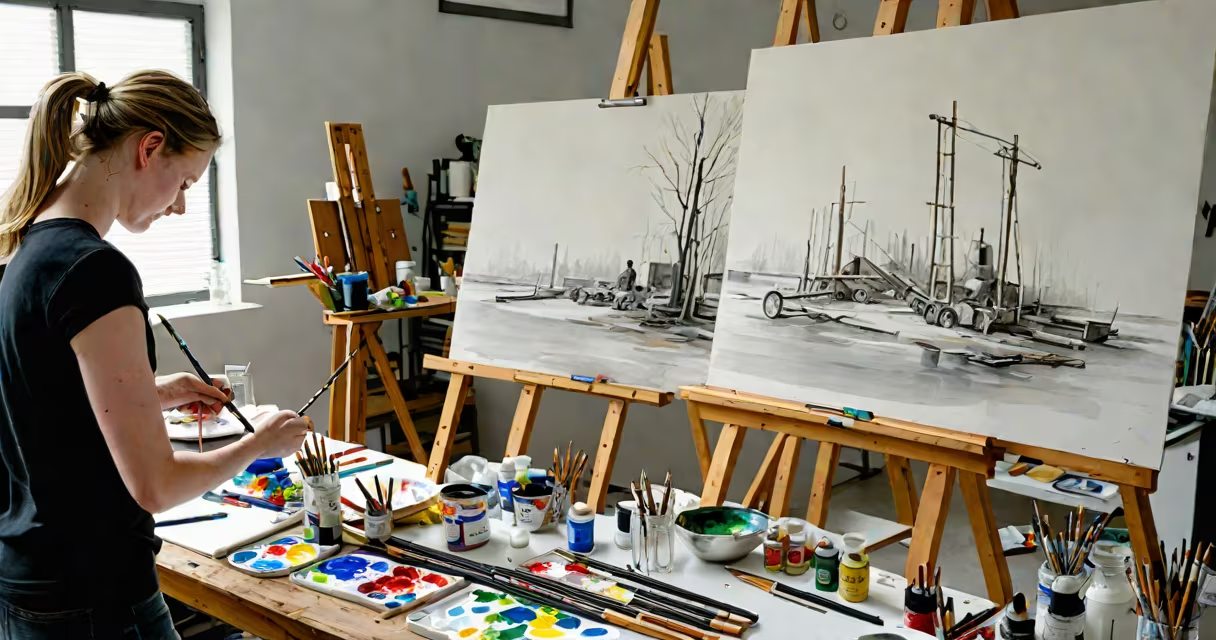
A bachelor of arts painting degree is an undergraduate academic program focused on developing visual art skills through studio practice, art history, and critical theory. Students complete coursework in drawing, color theory, composition, and material experimentation while engaging with contemporary and historical contexts. This degree typically spans four years and leads to a B.A. credential.
The program emphasizes interdisciplinary learning. Unlike a Bachelor of Fine Arts (B.F.A.), which prioritizes intensive studio training, the B.A. in painting integrates liberal arts requirements such as literature, philosophy, and social sciences. This structure supports a broader intellectual foundation alongside artistic development. Graduates often pursue careers in teaching, curating, arts administration, or further study in graduate programs.
Core courses include life drawing, painting techniques across media (oil, acrylic, watercolor), art history survey, and studio critique. Students build portfolios through required projects and may take electives in printmaking, digital illustration, or exhibition design. Final exhibitions and written research papers are common capstone components.
Bachelor of arts painting programs follow a credit-based model. Most require 120-130 semester hours. Core studio classes meet twice weekly for three hours each, combining hands-on work with peer review. Art history seminars focus on global movements from Renaissance to postmodernism, using primary sources and museum visits.
Students must complete 30-45 credits in non-art subjects. These include courses in psychology, foreign languages, ethics, and science. For example, a student might take a course in cognitive neuroscience to understand perception in visual art. This breadth distinguishes the B.A. from the B.F.A., which limits liberal arts credits to 15-20.
Capstone experiences vary. Some schools require a senior thesis involving a research paper and a body of original work. Others mandate a public exhibition. At the University of Michigan, seniors present their work in a gallery setting with faculty feedback and audience engagement metrics tracked via attendance logs and survey results.
Each B.A. in painting program includes five foundational elements: studio practice, art history, critical theory, professional development, and interdisciplinary study. Studio courses progress from basic techniques to advanced conceptual projects. A typical sequence begins with observational drawing and moves to mixed-media installation by the junior year.
Art history modules cover regional traditions and movements. Students analyze works like Frida Kahlo's "The Two Fridas" through formalist and feminist lenses. They compare her use of symbolic color with that of Yves Klein, who employed monochrome blue to evoke spiritual presence. These comparisons appear in written critiques and oral presentations.
Professional development includes resume workshops, portfolio reviews, and internships. Many institutions partner with local galleries and museums. At the University of Washington, students complete a 120-hour internship at the Frye Art Museum, assisting with cataloging 19th-century American paintings and preparing exhibition labels under supervision.
Graduates enter diverse fields. Common roles include art educator (K-12 or community college), arts administrator, freelance illustrator, or graduate school applicant. According to the U.S. Bureau of Labor Statistics, employment for fine artists, including painters, grew 3% from 2021 to 2031, with median annual earnings of $56,000.
Teaching positions often require state certification. A B.A. in painting provides the subject-matter expertise needed for licensure exams. For example, a graduate from the University of Texas at Austin completed a teaching certificate program and now teaches AP Studio Art at a public high school, where student enrollment in art courses increased by 27% over two years.
Arts administration roles involve managing nonprofit galleries, organizing events, and securing grants. The National Endowment for the Arts reports that 68% of funded arts projects in 2022 were led by individuals with humanities degrees, including B.A. in painting. One recipient, a former student at Brown University, secured a $45,000 grant to launch a youth mural initiative in Providence.
| Feature | Bachelor of Arts Painting | Bachelor of Fine Arts (B.F.A.) |
|---|---|---|
| Studio Credit Hours | 45-60 | 75-90 |
| Liberal Arts Credits | 30-45 | 15-20 |
| Focus | Interdisciplinary, conceptual, critical thinking | Technical mastery, portfolio development |
| Common Careers | Teaching, arts management, graduate study | Professional artist, commercial illustrator |
Many assume the B.A. in painting leads directly to a job as a professional painter. That's rare. Only 12% of B.A. graduates in visual arts secure full-time employment as practicing artists within five years, according to a 2023 report by the College Art Association. Most pursue roles that value analytical and communication skills gained through liberal arts coursework.
Another misconception is that B.A. programs offer less rigorous training. On the contrary, students complete the same number of studio hours as B.F.A. peers in foundational courses. The difference lies in distribution: B.A. students take fewer advanced studio electives but more cross-disciplinary courses. A student might take a course in environmental ethics alongside painting, exploring how land use narratives appear in field art.
At Sarah Lawrence College, a student named Maya Chen entered the B.A. in painting program with a background in theater. Her first-year project involved painting a series of portraits based on stage masks from Noh drama. She studied Japanese aesthetics through a course in East Asian performance traditions and incorporated gold leaf techniques learned in a workshop.
In her junior year, she curated a small exhibition titled "Faces of Performance," displayed in the campus gallery. The show included 12 paintings, audio recordings of Noh performances, and a 15-page essay analyzing emotional expression across cultures. Attendance reached 210 people, and the college's art department later invited her to lead a workshop on cultural hybridity in visual art.
After graduation, Chen enrolled in a master's program in museum studies at New York University. Her B.A. in painting provided the artistic foundation and critical structure needed for her current role as assistant curator at the Brooklyn Museum, where she manages rotating exhibitions on contemporary global art.