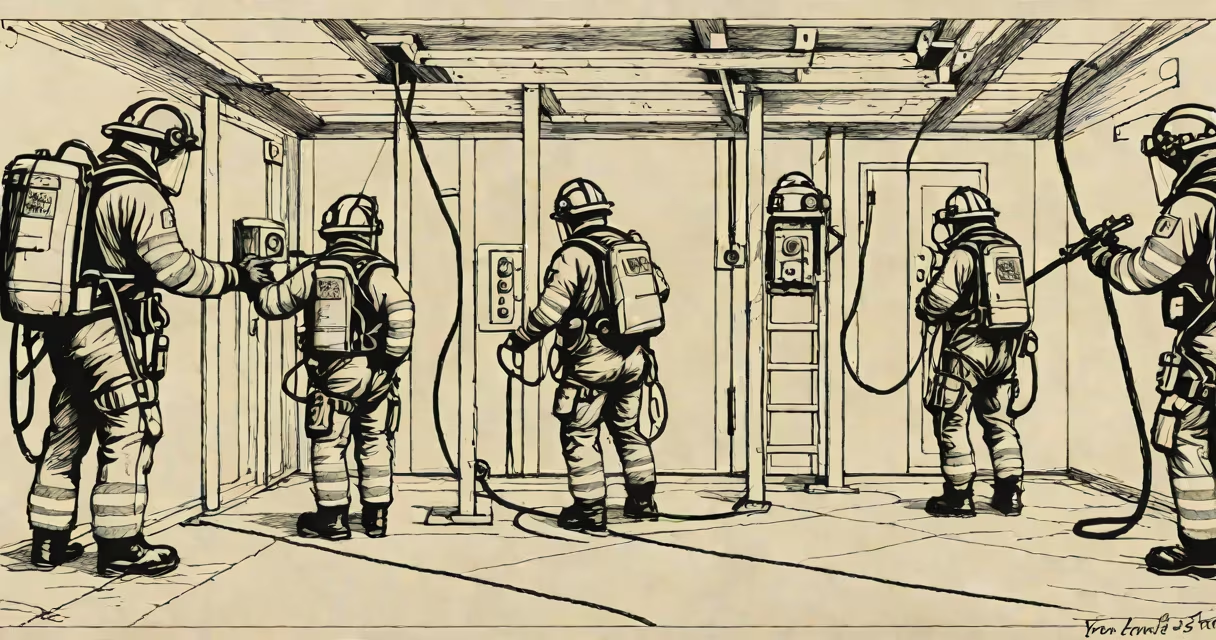
A confined space rescue plan is a documented procedure specifying how to safely extract a person from an enclosed or partially enclosed area where hazards such as toxic gases, oxygen deficiency, or engulfment exist. It must be tailored to the specific space, include roles, equipment, and communication methods, and comply with OSHA 29 CFR 1910.146(k).
Confined spaces include storage tanks, manholes, silos, and underground vaults. These environments often lack natural ventilation and pose risks like flash fires, chemical exposure, or structural collapse. A rescue plan ensures responders act quickly and correctly during emergencies.
The plan must be developed before any entry occurs. It includes identifying the hazards present, selecting appropriate rescue equipment, assigning trained personnel, and conducting drills. Failure to have a written plan can result in citations under OSHA regulations.
When someone enters a confined space, they carry a gas monitor and wear a full-body use connected to a retrieval line. If they become incapacitated, the attendant signals the rescue team. The team then activates the plan based on pre-established protocols.
Rescuers do not enter unless absolutely necessary. Instead, they use mechanical advantage systems-like a tripod and winch-to pull the victim out without entering the space. This reduces risk to rescuers and prevents secondary incidents.
Communication is critical. Teams use radios or hand signals. All actions are logged, including time of incident, equipment used, and personnel involved. Post-rescue debriefs identify gaps and improve future responses.
OSHA requires that a confined space rescue plan include:
There are two main types of plans: internal and external. Internal plans rely on in-house teams trained to respond. External plans contract with certified third-party rescue services. The choice depends on frequency of entry, complexity of spaces, and available resources.
| Type | Best For | Response Time | Cost |
|---|---|---|---|
| Internal | Facilities with frequent entries (e.g., wastewater plants) | Under 5 minutes | Higher long-term cost |
| External | Infrequent entries (e.g., construction sites) | 10-30 minutes | Limited upfront investment |
Many facilities use hybrid models. For example, a chemical plant may maintain an internal team for routine tank inspections but contract external specialists for complex silo cleanouts.
Confined space rescue plans are mandatory in industries involving hazardous materials, underground work, or high-risk environments. Common applications include oil and gas, water treatment, manufacturing, and mining.
For example, a refinery in Texas uses a confined space rescue plan during annual maintenance on a 30-foot diameter reactor vessel. Before entry, the site manager verifies that the plan is updated, the attendant is certified, and the tripod is inspected. During the shift, the attendant monitors air quality via a continuous sensor. When a worker reports dizziness, the plan triggers immediate evacuation and rescue.
Failure to implement a plan led to a fatality in 2019 at a paper mill in Wisconsin. An employee entered a pulp digester without a rescue plan. The attendant couldn't reach him due to poor communication. By the time emergency services arrived, the victim had succumbed to hydrogen sulfide exposure. OSHA cited the company for violating 29 CFR 1910.146(k).
One widespread error is believing that anyone on-site can perform a rescue. OSHA explicitly states that only trained individuals should attempt extraction. Untrained personnel entering a confined space increase the risk of multiple casualties.
Another misconception is that a rescue plan is only needed for deep or narrow spaces. In reality, any space with limited access and potential for hazard qualifies. A 3-foot-diameter sewer manhole counts-even if it's shallow.
A lesser-known requirement is that the plan must be reviewed annually and after any incident. Even minor changes-like adding a new valve or altering the layout-require updates. The National Institute for Occupational Safety and Health (NIOSH) emphasizes that outdated plans lead to fatal errors.
I once observed a drill at a municipal water facility where the team failed to deploy the tripod correctly. The winch jammed because the rope wasn't properly seated. After the drill, we discovered the equipment had not been maintained per manufacturer guidelines. That incident led to a policy change requiring monthly inspection logs.
A confined space rescue plan is not a generic emergency response form. It is not interchangeable with a fire evacuation plan or a spill response protocol. Each serves a distinct purpose and follows different regulatory frameworks.
It is also not optional. OSHA mandates that employers provide a rescue plan whenever a permit-required confined space is entered. The standard defines "permit-required" as any space containing or potentially containing a hazard that could cause death or serious injury.
Finally, the plan is not static. It evolves with operations. When a facility adds a new process or modifies a structure, the plan must be revised. A 2022 NIOSH report found that 43% of confined space incidents occurred in spaces where the rescue plan had not been updated in over two years.
Every confined space rescue plan must be accessible to all personnel involved. Digital copies stored on tablets or printed versions posted near entry points ensure quick reference during emergencies. Training sessions should include scenario-based exercises using actual equipment.