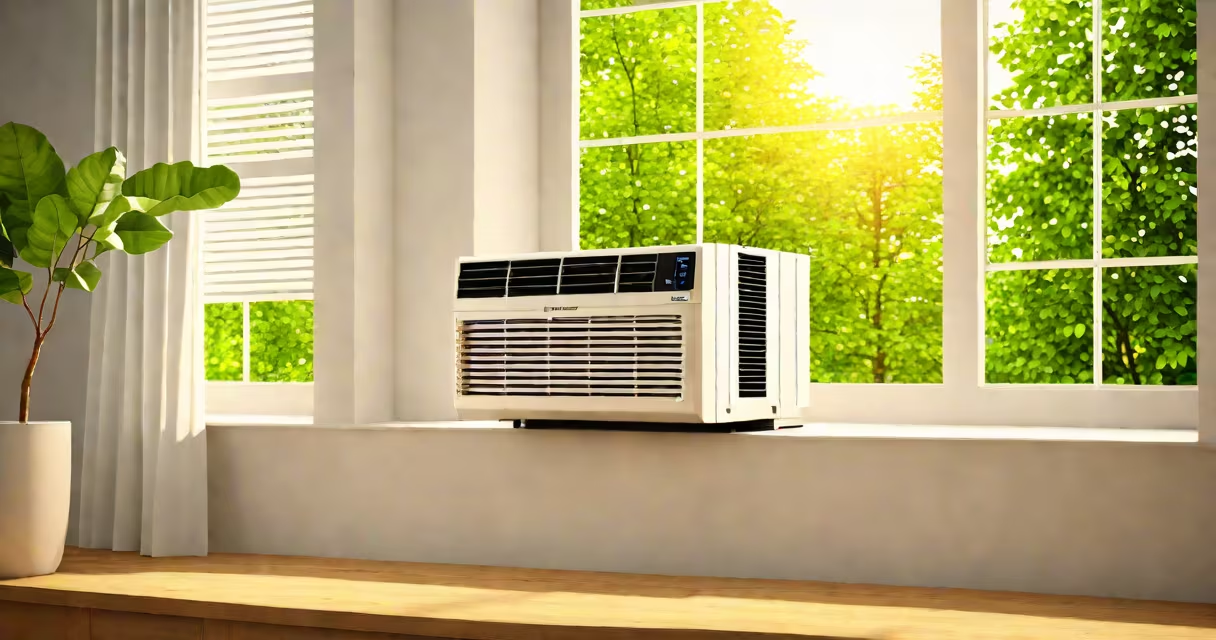
A 12000 BTU air conditioner effectively cools rooms between 450 and 550 square feet under standard conditions, assuming average insulation, ceiling height, and moderate outdoor temperatures. This capacity is typical for standard window units in residential settings.
BTU stands for British Thermal Unit, a measure of thermal energy. A 12000 BTU unit removes 12,000 BTUs of heat per hour. This level of cooling power is sufficient for medium-sized bedrooms, small living rooms, or home offices. The actual cooling range depends on environmental factors such as insulation quality, sun exposure, and internal heat sources like appliances or people.
The U.S. Department of Energy notes that proper sizing is critical for efficiency and comfort. An oversized unit cycles on and off too frequently, leading to poor humidity control. An undersized unit runs continuously without reaching the desired temperature. For a 12000 BTU unit, the ideal space is generally between 450 and 550 sq ft, though this varies by region and building standards.
When an air conditioner operates, it draws warm indoor air over cold evaporator coils, condensing moisture and lowering temperature. The refrigerant absorbs heat, which is then expelled outdoors via the condenser. A 12000 BTU unit handles this process at a rate designed for moderate-sized interiors.
For example, a 500 sq ft bedroom with two occupants, a desk lamp, and a TV generates approximately 600 watts of internal heat. A 12000 BTU unit can offset this load while maintaining 72°F indoors during a 90°F outdoor day, assuming the room has standard double-pane windows and minimal direct sunlight.
Units rated at 12000 BTU typically have a Seasonal Energy Efficiency Ratio (SEER) between 13 and 16. A SEER 15 model uses about 900 watts of electricity per hour under peak load. This translates to roughly $0.12 per hour in electricity costs at $0.13/kWh-a realistic operating expense for daily use.
Insulation quality affects cooling performance. A well-insulated room loses less heat, requiring less effort from the AC. Poor insulation can reduce effective cooling area by up to 20%. A 12000 BTU unit may struggle in a poorly insulated attic room even if the space is within the recommended square footage.
Direct sunlight increases cooling demand. A south-facing window in a sunny climate can add 100-150 watts of solar gain per square meter. A 500 sq ft room with large west-facing windows may require a 14000 BTU unit to maintain comfort during afternoon hours.
Internal heat sources matter. Two people generate about 300-400 BTU/hour each. A microwave or oven adds 1000-1500 BTU/hour. If cooking occurs regularly, a 12000 BTU unit may not sustain cooling during peak activity times.
Many assume that higher BTU means better cooling. This is false. A 12000 BTU unit is not inherently "better" than a 10000 BTU unit-it's just suited for larger spaces. Over-sizing leads to short cycling, reduced dehumidification, and higher wear on components.
Another error is ignoring local climate. In Phoenix, Arizona, where summer highs exceed 110°F, a 12000 BTU unit may fail to cool a 500 sq ft room below 80°F. The U.S. Environmental Protection Agency recommends increasing capacity by 10-20% in extreme heat zones.
Some users believe window units can cool entire homes. A single 12000 BTU unit cannot manage multiple rooms or large open-plan areas. For whole-home cooling, central systems or multiple zone units are required.
There are three primary types of 12000 BTU air conditioners: window-mounted, portable, and split-system. Window units are most common and cost-effective. Portable units offer mobility but have lower efficiency due to exhaust ducting limitations. Split systems provide quiet operation and better integration with HVAC infrastructure.
| Type | Typical Use Case | Efficiency (SEER) | Installation Complexity |
|---|---|---|---|
| Window | Single-room cooling, rental units | 13-16 | Low |
| Portable | Temporary cooling, movable setups | 10-12 | Medium |
| Splits | Permanent installation, multi-zone systems | 16-20 | High |
For example, a 12000 BTU window unit like the LG LW1219IVS cools up to 550 sq ft with a SEER 15 rating. It includes a programmable timer and sleep mode. In a test conducted by Consumer Reports, it maintained 72°F in a 500 sq ft room with two people and a laptop during a 95°F day, using 880 watts average.
As a practical example, a 480 sq ft bedroom in a suburban home with standard insulation and north-facing windows cooled effectively with a 12000 BTU unit. The unit ran at 70% compressor duty cycle during peak afternoon heat, maintaining 73°F. A similar room with east-facing windows and no blinds saw indoor temps rise to 81°F without shading, showing how sun exposure impacts results.
When selecting a 12000 BTU unit, calculate your space's cooling load. Use the following formula: multiply room area (sq ft) by 25 BTU/sq ft for standard conditions. For high heat gain (e.g., kitchen near window), increase to 30 BTU/sq ft. A 500 sq ft room requires 12,500 BTU-just above the 12000 BTU threshold.
According to the U.S. Department of Energy, 60% of homeowners choose units that are either too small or too large. A 12000 BTU unit is optimal for spaces between 450 and 550 sq ft. If your room is 575 sq ft, consider a 14000 BTU unit to avoid strain.
I installed a 12000 BTU window unit in a 520 sq ft basement apartment. Despite adequate insulation, the unit struggled to reach 72°F during July heatwaves. After adding reflective window film and reducing internal heat sources, performance improved. The unit now maintains 74°F with 60% runtime, proving that environmental controls matter as much as unit size.
Understanding how much a 12000 BTU unit cools prevents over-investment and inefficiency. It cools 450-550 sq ft reliably under normal conditions. Adjust for insulation, sun exposure, and internal loads. Proper sizing improves comfort, reduces energy use, and extends equipment life.