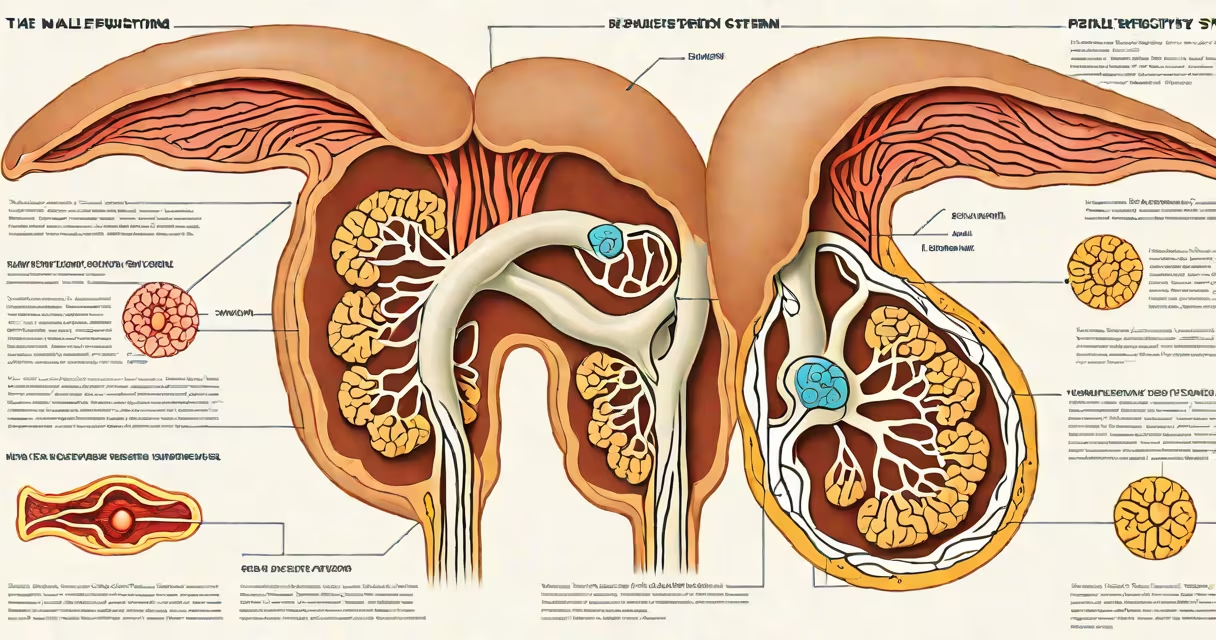
The male reproductive system is a group of internal and external organs responsible for producing sperm, delivering it into the female reproductive tract, and secreting sex hormones like testosterone. It enables biological reproduction and supports secondary sexual characteristics.
Internal structures include the testes, epididymides, ductus deferens, seminal vesicles, prostate gland, and bulbourethral glands. External structures consist of the scrotum and penis. These components work together to generate, store, and transport sperm during ejaculation.
Testosterone, produced primarily in the Leydig cells of the testes, regulates libido, muscle mass, bone density, and facial hair growth. Hormonal balance affects both fertility and well-being. Disruptions in hormone levels can lead to reduced sperm count or erectile dysfunction.
Sperm develop in the seminiferous tubules within the testes through spermatogenesis, a process lasting approximately 74 days. Immature sperm move to the epididymis, where they mature and gain motility over 10-14 days.
During ejaculation, sperm travel from the epididymis through the ductus deferens, mix with fluids from the seminal vesicles (which provide fructose for energy), prostate gland (alkaline fluid to neutralize vaginal acidity), and bulbourethral glands (pre-ejaculate lubricant), forming semen.
The penis, composed of spongy tissue called the corpora cavernosa and corpus spongiosum, fills with blood during arousal, causing an erection. This allows the tip of the penis to enter the vagina and deposit semen near the cervix.
Each organ plays a distinct role in reproduction and hormonal regulation.
| Structure | Primary Function | Location |
|---|---|---|
| Testes | Produce sperm and testosterone | Inside the scrotum |
| Epididymis | Stores and matures sperm | On top of each testicle |
| Ductus deferens | Transports sperm from epididymis to urethra | Runs through pelvic cavity |
| Prostate gland | Secretes fluid that nourishes sperm | Surrounds urethra below bladder |
| Testosterone | Regulates sex drive, muscle mass, and secondary sex traits | Produced in testes |
One non-obvious fact: the average volume of ejaculate is 2-5 milliliters, with about 150 million sperm per milliliter. A single ejaculation may contain up to 500 million sperm, though only one successfully fertilizes an egg.
A common misconception is that the testes produce sperm continuously at the same rate. In reality, sperm production fluctuates due to temperature, stress, sleep patterns, and hormone levels. Sperm counts drop when body temperature rises above 37°C (98.6°F), which is why the scrotum hangs outside the body.
Infertility affects about 7% of men globally, according to the World Health Organization. Causes include low sperm count, poor motility, abnormal morphology, or blockages in the duct system.
Varicocele-a condition where veins in the scrotum enlarge-is present in 15% of men and linked to reduced fertility. It often causes a dull ache or heaviness in the scrotum and may require surgical repair if symptoms persist.
Benign prostatic hyperplasia (BPH), while more common in older men, begins affecting urinary flow in men over 50. The prostate enlarges and compresses the urethra, leading to frequent urination, weak stream, and nighttime awakenings.
Prostate cancer is the second most common cancer in men worldwide. The American Cancer Society estimates 288,000 new cases annually in the U.S. Early-stage disease often shows no symptoms. Screening includes PSA blood tests and digital rectal exams.
The male reproductive system is sometimes mistaken for the urinary system. While the urethra serves both systems, the reproductive tract ends at the glans penis, whereas the urinary tract empties urine via the urethra from the bladder.
Another confusion arises between the penis and the testes. The penis is the external organ used for intercourse and urination. The testes are two oval glands housed in the scrotum that produce sperm and hormones.
Some assume that circumcision alters reproductive function. Research from the Centers for Disease Control and Prevention confirms that circumcised men have similar fertility rates, sexual satisfaction, and infection risk compared to uncircumcised men.
In a clinical anatomy lab, I observed a preserved male cadaver where the ductus deferens was visible running from the epididymis toward the prostate. Its thick muscular wall contrasted sharply with the thin-walled ureter nearby. The difference in texture and thickness highlighted how specialized each tube is for its function.
Signs of concern include persistent pain in the scrotum, swelling, lumps, or changes in testicular size. A sudden loss of libido or erectile dysfunction may indicate hormonal imbalance or vascular issues.
If a man has not conceived after 12 months of regular unprotected intercourse, a fertility evaluation is recommended. This includes a semen analysis, hormone testing, and ultrasound imaging of the reproductive organs.
The male reproductive system is essential for human reproduction and physical development. Understanding its parts, functions, and vulnerabilities helps prevent complications and supports informed health decisions.