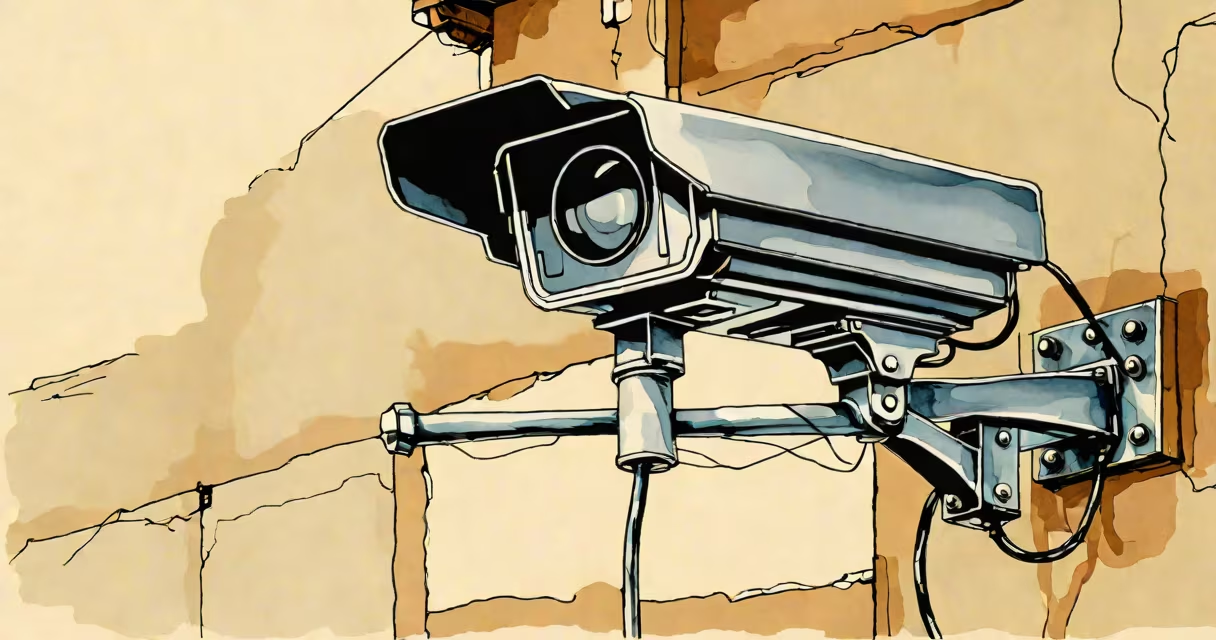
CCTV stands for closed-circuit television-a system that uses cameras to transmit video signals to a limited set of monitors, not broadcast publicly. Unlike public webcams or live streams, CCTV feeds are restricted to authorized viewers within a private network.
CCTV operates through a closed loop: cameras capture footage, send it via wired or wireless connections to a central recording device, and display it on screens only accessible to designated personnel. This setup prevents unauthorized access and ensures privacy. The term "closed-circuit" emphasizes that the signal travels only between predefined endpoints, not over open channels.
Modern CCTV systems often include digital video recorders (DVRs) or network video recorders (NVRs) that store recordings for later review. These systems support motion detection, remote viewing via smartphones, and integration with alarms. They are widely used in retail stores, parking lots, banks, and residential properties to deter crime and provide evidence after incidents.
A CCTV system begins with one or more cameras positioned to cover specific areas. These cameras continuously capture visual data and send it through cables or Wi-Fi to a central control unit. The signal remains isolated from public networks, ensuring that only those with access to the system can view the feed.
The central unit processes the incoming video stream and records it onto storage devices such as hard drives or cloud servers. Most systems allow users to set recording schedules, trigger recordings based on motion, or enable continuous recording. Users can then play back recorded footage using a monitor or mobile app connected to the system.
For example, a convenience store in Chicago uses four CCTV cameras placed at entrances, cash registers, and the back alley. The system runs on a local NVR with 30 days of retention. When a theft occurred last month, staff reviewed footage from the register camera and identified the suspect within 15 minutes. The video was handed to police and led to an arrest.
CCTV systems fall into two main categories: analog and IP-based. Analog systems use coaxial cables to transmit video signals to a DVR. They are simpler to install and less expensive upfront but offer lower resolution and limited scalability. IP systems use internet protocol to send high-definition video over Ethernet or Wi-Fi, enabling remote access and advanced features like facial recognition.
| Type | Transmission Method | Resolution | Best For |
|---|---|---|---|
| Analog | Coaxial cable | Standard (720p max) | Small businesses, basic home security |
| IP (Network) | Ethernet/Wi-Fi | Full HD to 4K | Large facilities, remote monitoring, smart integration |
Some systems combine both types. A warehouse in Denver uses analog cameras for perimeter coverage and IP cameras inside the building. The hybrid setup balances cost and performance while allowing centralized management through a single interface.
Many people assume CCTV is always active and constantly watched. In reality, most systems operate unattended. A camera may record 24/7, but no human monitors the feed in real time unless staff are on duty. The primary purpose is post-event investigation, not live surveillance.
Another myth is that CCTV deters all crime. Research from the University of Cambridge shows that CCTV reduces property crimes by 10-15% in targeted areas but has little effect on violent offenses. A 2021 study published in *PLOS ONE* analyzed 136 studies and found that CCTV's impact varies by location and design. In urban centers with high foot traffic, cameras reduced shoplifting by 18%, but in low-density neighborhoods, the effect was negligible.
There's also confusion between CCTV and live-streaming platforms. A backyard webcam linked to a smartphone app is not CCTV-it broadcasts over the internet and can be accessed by anyone with the link. True CCTV systems are designed to remain private and secure.
Businesses use CCTV to prevent employee theft and ensure compliance. A restaurant chain in Texas deployed cameras above kitchen prep stations and found a 40% drop in food waste after managers began reviewing footage weekly. The system flagged improper disposal practices and trained staff to follow protocols.
Homes increasingly adopt CCTV for safety. A homeowner in Portland installed a wireless outdoor camera system after a break-in. The system included night vision, motion alerts, and cloud storage. When a package was stolen from the porch, the footage showed the thief walking away. Police used the video to issue a warrant and recover the item.
Public spaces also rely on CCTV. London's Metropolitan Police use over 400,000 cameras across the city. These are integrated with AI tools that flag suspicious behavior, such as loitering near subway exits. The system helped reduce crime in high-traffic zones by 12% over two years, according to a report by the UK Home Office.
One non-obvious fact: many CCTV systems do not require constant power. Solar-powered outdoor units exist and can run for weeks without charging. A community center in Arizona uses solar-powered cameras around its grounds. They charge during daylight and function through the night using battery reserves. This setup reduces installation costs and avoids electrical infrastructure.
CCTV excels at documentation and deterrence. It doesn't stop intruders in real time-unlike alarms or security guards-but it provides evidence after an incident. For maximum protection, combine CCTV with physical barriers, access controls, and alarm systems.
For example, a small office in Seattle uses a combination of door sensors, motion-activated lights, and a single indoor camera. The camera captures entry attempts, but the system only triggers an alert when the door sensor activates. This layered approach prevents false alarms and improves response speed.
When selecting a system, consider placement, storage duration, and legal requirements. In the U.S., federal law under the Electronic Communications Privacy Act (ECPA) restricts recording in private areas like restrooms. State laws vary-California requires written notice when cameras are active in workplaces. Always consult local regulations before installing.
CCTV is not a magic solution. It works best when paired with clear policies, regular maintenance, and awareness among users. Its value lies in providing objective records of events-proof that can resolve disputes, support investigations, and improve safety over time.