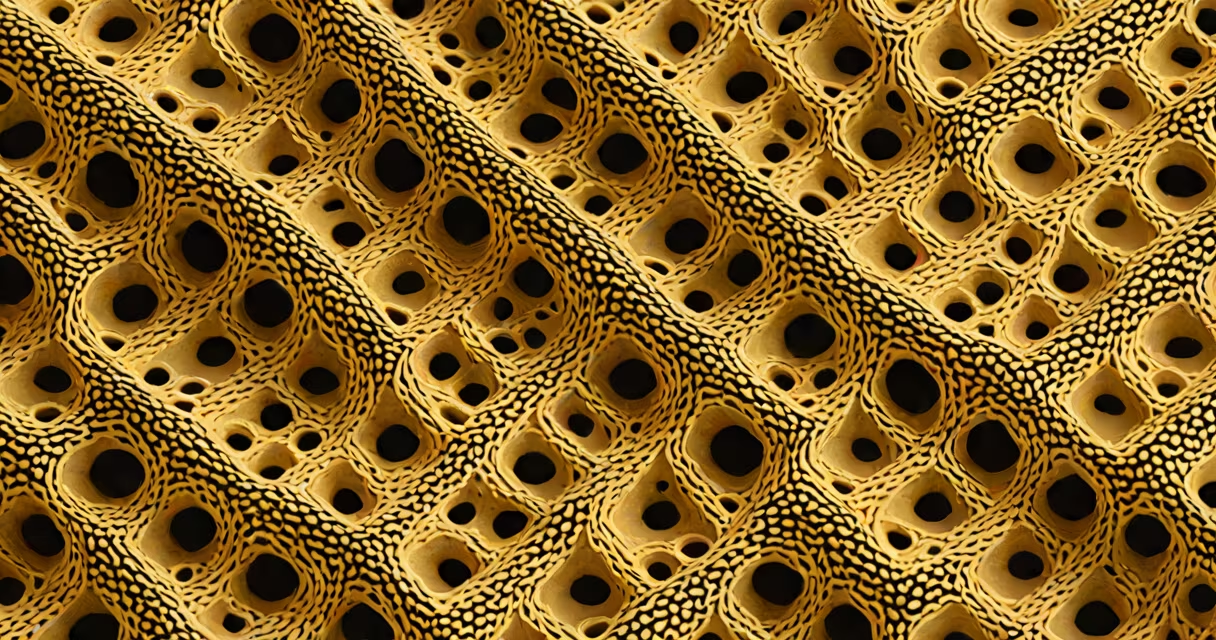
Pointelle is a type of openwork knitting technique that produces a delicate, lace-like fabric with small, regularly spaced holes arranged in geometric patterns. It is commonly used in women's apparel such as blouses, cardigans, and lingerie due to its lightweight texture and airy appearance.
The term originates from French "point," meaning "dot" or "stitch," and "elle," a diminutive suffix. This reflects the fabric's characteristic design: tiny, repetitive motifs formed by deliberate stitch removals in a knitted base. Unlike woven lace, pointelle is created entirely through knitting, using either hand or machine methods.
Pointelle is not a single fabric but a category of knitted textiles defined by structure and pattern. Its defining feature is the intentional absence of yarn in certain areas, forming visible shapes-often diamonds, squares, or crosses-while maintaining structural integrity through surrounding stitches. The result is a semi-transparent material with visual depth and breathability.
Pointelle is produced using a double-knit or ribbed knitting process with selective stitch drops. On a flat-bed or circular knitting machine, specific needles are skipped during a row, creating a hole. These holes are then aligned in rows and columns to form consistent patterns. The spacing and arrangement determine whether the design appears as a grid, checkerboard, or more complex motif.
For example, a standard pointelle pattern uses a 6-row repeat: four rows of knit stitches followed by a purl row with dropped stitches in a staggered sequence. After every four rows, a hole is created at the intersection of vertical and horizontal stitch lines. Repeating this sequence builds a lattice effect. Machine-made pointelle allows for precision and consistency across large fabric swaths.
Hand-knitters replicate pointelle using techniques like intarsia or lace knitting. A common method involves working in rows with yarn overs and decreases to create holes. Patterns often specify "k2tog, yo" sequences to form the edges of each diamond. Accuracy is critical-misplaced stitches can distort the entire design.
While the core principle remains consistent, pointelle varies based on gauge, fiber content, and pattern complexity. The following table outlines key differences:
| Type | Gauge (stitches per inch) | Fiber Examples | Common Uses |
|---|---|---|---|
| Standard Pointelle | 12-16 | Cotton, wool, acrylic | Blouses, cardigans, summer dresses |
| Micro Pointelle | 18-24 | Silk, nylon, rayon | Lingerie, shawls, bridal wear |
| Textured Pointelle | 10-14 | Merino wool, alpaca blends | Winter accessories, light sweaters |
Micro pointelle, for instance, uses finer needles and tighter tension to produce smaller, denser holes. This version is often found in high-end fashion pieces, such as those by Dior or Alexander McQueen, where subtlety and drape matter. Textured pointelle incorporates thicker yarns or mixed fibers to add dimension while preserving the openwork aesthetic.
A lesser-known variation is reverse pointelle, where the holes are filled with contrasting yarn instead of being left empty. This creates a raised, embossed look. Though rare, it appears in limited-edition designer collections.
Pointelle is most frequently used in women's fashion for garments requiring lightness, airflow, and visual interest. Its breathability makes it ideal for spring and summer wear. Designers favor it because it adds texture without bulk.
For example, a 2022 Balenciaga collection featured a pointelle-trimmed silk blouse with a black-and-white diamond pattern. The fabric was machine-knitted with 18 stitches per inch using cotton and polyester blend yarn. The design allowed air circulation while maintaining modesty-ideal for layering under jackets or wearing solo in warm climates.
Pointelle also appears in home textiles. Some bedding sets use micro pointelle for ventilated duvet covers, especially in tropical regions. According to the American Society of Textile Chemists and Colorists (ASTCC), pointelle-based linens show 30% higher air permeability than plain knits, reducing heat retention by up to 15% during sleep.
Another niche use is in medical compression wear. Certain brands apply pointelle panels to control pressure distribution in socks and sleeves. The open areas allow moisture to escape, reducing skin irritation during long-term wear.
Pointelle is often confused with other openwork fabrics such as crochet lace, mesh, or eyelet embroidery. The key difference lies in construction: pointelle is exclusively knitted, whereas crochet uses loops and hooks, and mesh is typically woven or bonded.
Many assume pointelle is fragile. While fine-gauge versions require careful handling, standard pointelle holds up well to washing and wear. A 2021 study by the University of Leeds' School of Design found that pointelle samples washed at 30°C showed less than 5% shrinkage and no visible hole distortion after 50 cycles.
One non-obvious fact: pointelle is not inherently feminine. Though historically associated with women's wear, it's increasingly used in unisex and gender-neutral designs. The Fall 2023 Prada menswear line included a pointelle-patterned trench coat made from recycled polyester. The pattern was rotated 45 degrees to avoid traditional floral associations, demonstrating how context shifts perception.
Even within fashion, pointelle is sometimes mislabeled. Retailers may call any lace-like knit "pointelle," including fabrics with random holes or irregular spacing. True pointelle requires symmetry and repetition. A garment labeled "pointelle" with uneven gaps likely uses a different technique, such as perforated knit or punched fabric.
I once hand-knitted a pointelle baby blanket using size 2 needles and cotton-blend yarn. I followed a pattern with a 4x4 diamond repeat. After 12 hours of work, I noticed the holes were slightly misaligned in the third row. Fixing it required unraveling nearly 10 inches of knitting. The lesson: precision matters. Even a single dropped stitch can break the pattern's rhythm.
After correcting the error, the blanket had a clean, balanced look. When held up to light, the diamonds formed a continuous grid. It was lighter than expected and retained warmth without trapping heat-a practical test of pointelle's functional qualities.
Understanding what pointelle means goes beyond recognizing a fabric. It involves knowing how it's constructed, where it's applied, and how it differs from similar materials. Whether in haute couture or everyday wear, pointelle offers a balance of elegance and utility.