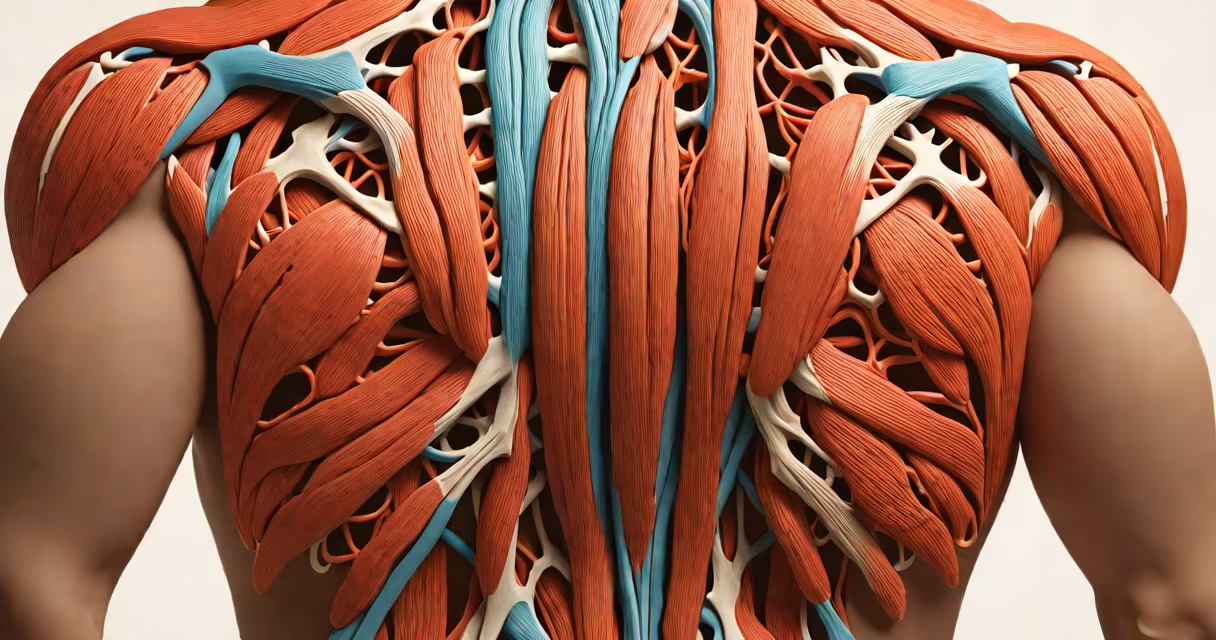
The shoulder complex consists of four functional muscle groups: the deltoid, rotator cuff muscles, scapular stabilizers, and accessory muscles like the pectoralis minor. These work together to enable arm movement, stabilize the joint, and support overhead actions.
Shoulder movement relies on coordinated action between muscles that move the arm and those that stabilize the shoulder blade. The glenohumeral joint-the ball-and-socket joint between the humerus and scapula-requires precise control to prevent dislocation during motion.
For example, when lifting a heavy grocery bag overhead, the anterior deltoid initiates the lift, the supraspinatus (part of the rotator cuff) helps start the upward motion, and the serratus anterior pulls the scapula forward to maintain alignment. Without this coordination, the joint becomes unstable.
According to the American Academy of Orthopaedic Surgeons (AAOS), shoulder instability affects approximately 2% of adults annually, often due to muscular imbalances or overuse injuries.
Each group plays a distinct role in shoulder function. The deltoid handles abduction and flexion, the rotator cuff maintains joint integrity, scapular stabilizers position the shoulder blade, and smaller muscles assist in fine-tuned movements.
| Group | Specific Muscles | Primary Function | Common Injury |
|---|---|---|---|
| Deltoid | Anterior, middle, posterior fibers | Arm elevation, forward/backward movement | Overuse strain from repetitive overhead activity |
| Rotator Cuff | Supraspinatus, infraspinatus, teres minor, subscapularis | Joint stabilization, internal/external rotation | Tendinopathy, tears from falls or sports |
| Scapular Stabilizers | Serratus anterior, lower trapezius, rhomboids | Positioning the scapula during movement | Winging of the scapula from nerve injury or weakness |
| Accessory | Pectoralis minor, levator scapulae | Assist in shoulder positioning and posture | Postural strain from prolonged sitting |
One non-obvious fact: the rotator cuff isn't a single muscle-it's four distinct muscles working as a unit. Their tendons form a "cuff" around the humeral head, preventing it from slipping out during movement. A tear in any one of them can disrupt the entire system.
These muscles activate during daily tasks and athletic performance. Lifting a suitcase, throwing a baseball, or reaching for a high shelf all depend on shoulder muscle synergy.
For instance, a tennis player serving at 100 mph uses the posterior deltoid to extend the arm, the infraspinatus to externally rotate the shoulder, and the serratus anterior to protract the scapula. Failure in any one component increases injury risk.
A 2021 study published in the Journal of Orthopaedic & Sports Physical Therapy found that 68% of overhead athletes reported rotator cuff dysfunction, highlighting the demand placed on these muscles.
Many people assume the shoulder is just one large muscle-the deltoid. But the deltoid is only one piece of a larger system. Ignoring the rotator cuff or scapular stabilizers leads to poor movement patterns and long-term joint wear.
Another misconception: strengthening the deltoid alone improves shoulder health. In reality, weak serratus anterior or underactive lower trapezius cause scapular winging, which strains the rotator cuff. Corrective exercises must address the whole chain.
I once observed a client attempting push-ups with rounded shoulders. Despite strong deltoids, his scapular stabilizers were inactive. After six weeks of targeted activation drills, his posture improved, and shoulder pain resolved-proof that isolated strength doesn't equal functional stability.
To maintain shoulder health, train all four muscle groups. For example:
Ignoring any group increases the risk of impingement syndrome, where the rotator cuff tendons compress against bone during overhead motion. The Mayo Clinic reports that 70% of patients with shoulder pain have this condition, often linked to muscle imbalance.
The shoulder is not a single muscle but a network of four functional groups: deltoid, rotator cuff, scapular stabilizers, and accessory muscles. Understanding what muscles make up the shoulder enables better training, injury prevention, and recovery. Focus on balanced development-not just visible strength.