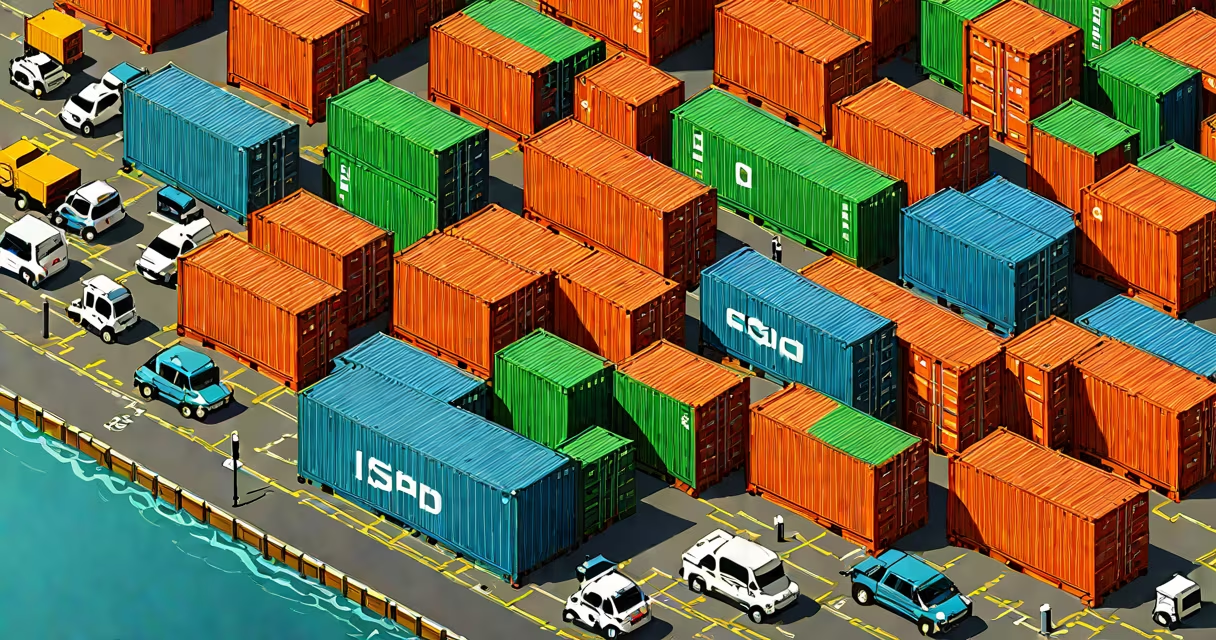
Container number tracking is the process of monitoring the real-time location and status of a shipping container using its unique 11-character identifier, typically assigned under ISO 6346 standards. This system enables shippers, carriers, and customs authorities to trace cargo movement across ports, rail lines, and road networks globally.
The container number-formatted as four letters followed by seven digits, ending with a check digit-is the primary reference point. For example, a container labeled "MSKU1234567" contains a standardized code that identifies the owner (MSKU), container type, size, and a unique serial number. This code is scanned at every handoff point, from terminal gates to rail yards and trucking depots.
Tracking relies on a network of sensors, GPS devices, RFID tags, and automated gate systems. When a container moves between locations, its position is updated in databases maintained by shipping lines, ports, and logistics platforms. Data flows into systems like Maersk's SeaExplorer or Flexport's Visibility Platform, which provide dashboards showing container progress.
Every time a container enters or exits a facility, its number is read via optical scanners, RFID readers, or manual entry. These events generate timestamps and geolocation data, which are stored in centralized databases. The system uses this data to calculate estimated arrival times and flag delays.
For instance, when a container arrives at the Port of Los Angeles, a scanner captures the number "COSU1234567." The system logs the timestamp, GPS coordinates, and terminal ID. This update triggers notifications to the shipper and forwarder, who can then schedule pickup trucks or prepare customs documentation.
Modern systems integrate with IoT devices. A container equipped with a GPS-enabled tracker sends location updates every 15 minutes. If the container deviates from its planned route-say, it's rerouted to Houston instead of Chicago-the system alerts stakeholders via email or API feed. This reduces risk of theft and loss during transit.
There are three main types of container number tracking systems, each with different accuracy levels and implementation costs:
| System Type | Accuracy | Update Frequency | Use Case |
|---|---|---|---|
| Manual Gate Entry | Low (±1 hour) | Once per handoff | Small terminals, low-volume routes |
| Automated Optical Scanning | Medium (±15 mins) | At gate exit/entry | Major ports, high-throughput operations |
| GPS + IoT Tracker | High (±5 mins) | Every 15-30 mins | High-value cargo, cold chain, sensitive materials |
Manual systems depend on human operators to enter the container number into a database. Errors occur frequently-misreading "1" as "I" or mistyping a digit. A 2021 study by the International Transport Forum found that 12% of container tracking errors originated from manual data entry.
Automated scanning systems use cameras and OCR software to read the number from the container's side. These reduce errors by 80% compared to manual methods. Maersk's digital gateway at Rotterdam uses AI-powered recognition to identify containers within 3 seconds of arrival.
IoT-based tracking offers continuous visibility. Devices like the Samsara GO 2 or Geotab's Fleet Management System track container position, temperature, humidity, and door status. In 2022, a shipment of pharmaceuticals from Singapore to Frankfurt was delayed due to a failed refrigeration unit. The container's IoT sensor detected the temperature spike 18 hours before delivery, allowing the carrier to reroute and prevent spoilage.
Many assume that container number tracking provides real-time, end-to-end visibility. That's not true. Gaps exist between handoffs-especially when containers move between railroads, ports, and trucking companies. Each entity may use a different system, leading to data silos.
A notable failure occurred in 2019 when a container carrying $1.2 million in electronics disappeared from a rail yard in Chicago. The container number was logged at the origin terminal, but no further updates were recorded until it appeared in a warehouse in Miami. The gap spanned 14 days and highlighted poor intermodal coordination. According to a U.S. Department of Transportation report, 37% of lost containers go unaccounted for during rail-to-truck transfers.
Another misconception is that tracking works equally well in all regions. In sub-Saharan Africa, only 43% of major ports have automated gate systems. In Nigeria's Port of Lagos, manual entry remains standard. A 2023 World Bank assessment showed that container dwell times in Lagos average 12 days-over twice the global average-due to poor tracking infrastructure.
Even when systems are in place, data quality varies. Some carriers upload container numbers without verifying the format. A container labeled "MSKU123456" missing the final check digit causes parsing failures in downstream systems. The International Organization for Standardization (ISO) mandates that all container numbers follow ISO 6346, but compliance is not enforced uniformly.
Consider a 40-foot dry container shipped from Shanghai to Seattle. The container number is "COSU1234567." Here's how tracking unfolds:
This entire process generates over 40 data points. The shipper receives automated alerts at each stage. If the container had been stolen in Singapore, the system would have flagged the absence of a scan at the next port.
I once tracked a container from Hamburg to Atlanta that went missing for 48 hours after being unloaded at the Port of Savannah. The number was scanned at the terminal, but no subsequent update appeared. After checking with the carrier's API, we discovered the container had been misrouted to a storage yard in Jacksonville. The error was traced to a faulty barcode label. Correcting the label and resubmitting the data restored visibility.
Accurate container number tracking reduces supply chain risk. A 2022 McKinsey report found that companies with real-time tracking reduced inventory holding costs by 18% and improved on-time delivery rates by 22%. Delays cost the global economy $1.2 trillion annually in lost productivity, according to the World Economic Forum.
Customs clearance depends on accurate tracking. If a container's number doesn't match the bill of lading, it can be held at the border. In 2023, U.S. Customs and Border Protection reported that 14% of container inspections were triggered by mismatched or missing tracking IDs.
For exporters, tracking supports compliance with regulations like the U.S. Customs-Trade Partnership Against Terrorism (C-TPAT) and the EU's Entry Summary Declaration (ENS). These require verified tracking data for high-risk shipments.
Container number tracking is not a single tool-it's a layered system combining physical identification, digital data flow, and cross-organization coordination. It's essential for modern trade, yet vulnerable to gaps in infrastructure, human error, and inconsistent standards. Understanding how it works reveals both its power and its limits.