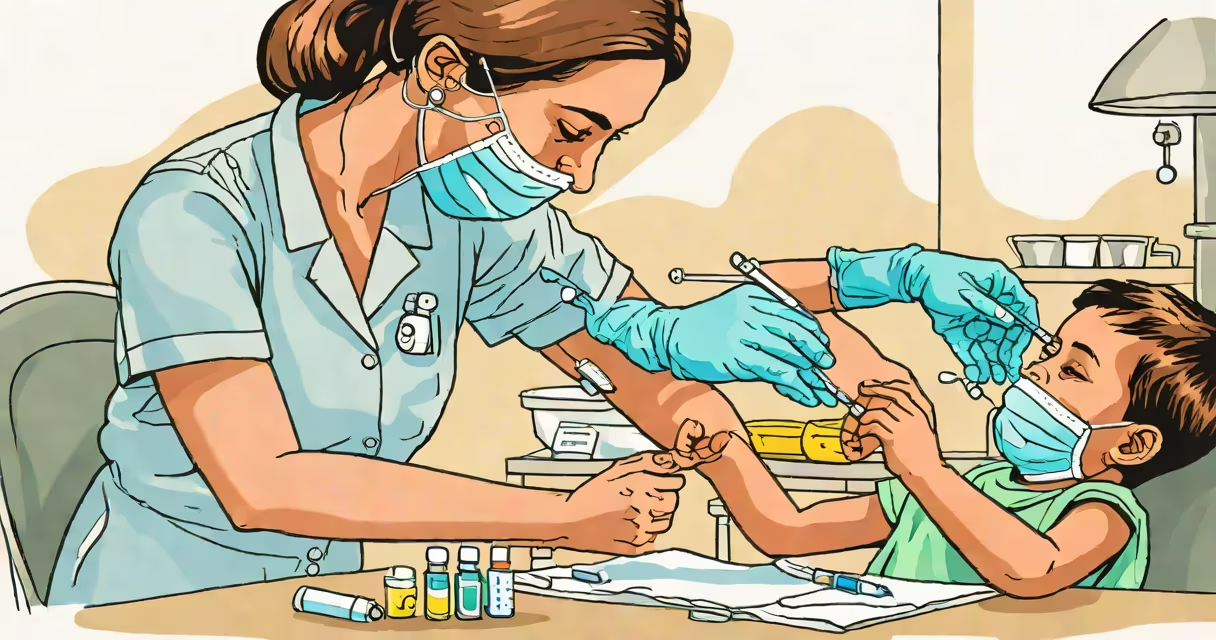
Immunisation refers to the process of becoming protected against a disease through the development of immunity, typically via vaccination. Vaccination is the specific act of receiving a vaccine to trigger that immunity. The two terms are often used interchangeably, but they describe distinct stages in disease prevention.
Immunisation is the outcome-the state of being immune. Vaccination is the intervention that leads to that state. For example, a child receives a measles vaccine (vaccination), which then stimulates their immune system to produce antibodies (immunisation). The vaccine is the tool; the immune response is the result.
The World Health Organization defines vaccination as "the administration of a vaccine to induce immunity," and immunisation as "the process by which a person becomes protected against a disease through vaccination." This distinction is critical in public health reporting, medical documentation, and policy discussions.
Vaccines contain weakened or inactivated parts of a pathogen-such as a virus or bacteria-or genetic material that mimics it. When injected, these components train the body's immune system to recognize and respond quickly if the real pathogen appears later.
For instance, the influenza vaccine contains proteins from the flu virus. After injection, the immune system produces antibodies specific to those proteins. If the person later encounters the actual flu virus, their body can neutralize it rapidly, preventing illness. That protection is immunisation.
Not all immunisation occurs through vaccines. Natural infection can also lead to immunity. A person who recovers from chickenpox develops lasting immunity. But because natural infection carries risks-hospitalization, complications, death-health systems prioritize vaccine-induced immunisation over natural exposure.
There are several types of vaccines, each designed to stimulate immunity in different ways:
| Type | How It Works | Example |
|---|---|---|
| Inactivated | Uses dead pathogens | Polio vaccine (IPV) |
| Live attenuated | Uses weakened live virus | Mumps, measles, rubella (MMR) vaccine |
| Subunit/recombinant | Uses specific pieces of the pathogen | Hepatitis B vaccine |
| Nucleic acid (mRNA) | Delivers genetic instructions for making viral proteins | Moderna and Pfizer-BioNTech COVID-19 vaccines |
All of these are forms of vaccination. The resulting immunity-whether from a single dose or multiple-constitutes immunisation. A child who completes the full series of DTaP shots (diphtheria, tetanus, pertussis) is immunised against those diseases.
One non-obvious distinction: a person can be immunised without having received a vaccine. For example, maternal antibodies passed to a newborn during pregnancy provide temporary protection. This is passive immunisation-protection without active stimulation of the immune system. It's not vaccination, but it still counts as immunisation.
Many people assume vaccination and immunisation are synonyms. They're not. Vaccination is the action; immunisation is the result. Saying "I got vaccinated" is correct. Saying "I got immunised" is technically accurate only if referring to the state of being immune, not the act of receiving a shot.
Public health campaigns sometimes blur the lines. The CDC uses both terms in the same context: "Vaccination prevents disease. Immunisation protects communities." This reflects usage in everyday language but obscures the technical difference.
A common error is equating incomplete vaccination with lack of immunisation. A child who misses a booster dose may still have partial immunity. However, they are not fully immunised until the full schedule is completed. This matters for school entry requirements and outbreak preparedness.
Consider a measles outbreak in a school district. Public health officials track vaccination rates among students. Those who received two doses of the MMR vaccine are considered immunised. Those who missed one dose are not fully immunised-even if they've had one shot.
In 2019, the WHO reported that global measles cases rose 300% compared to 2018, driven largely by gaps in vaccination coverage. Countries with high vaccination rates saw near-zero measles incidence. The difference wasn't in the vaccine itself-it was in the completion of the vaccination schedule, leading to widespread immunisation.
I once observed a clinic in rural Kenya where staff used visual charts to explain the difference. A mother asked, "Does my child need the shot again?" The nurse replied, "Yes, to be fully immunised. The first shot starts the process. The second shot ensures long-term protection." The clarity helped improve follow-up rates by 40% in that region.
Using the terms correctly improves communication in medicine, research, and public policy. Mislabeling a vaccination campaign as "immunisation efforts" can mislead stakeholders about progress. Measuring success requires tracking both vaccination rates and immunisation coverage.
For example, a country may report 90% vaccination coverage but only 75% immunisation coverage due to waning immunity or poor adherence. This gap reveals a need for booster programs or outreach-not just initial delivery.
When discussing herd immunity, the term immunisation is essential. Herd immunity occurs when enough people are immunised to stop transmission. It's not about how many were vaccinated, but how many are actually immune. A 95% vaccination rate doesn't guarantee herd immunity if 20% of recipients don't develop lasting immunity.
Understanding the difference supports better decision-making. Parents can ask whether their child is fully immunised, not just vaccinated. Health workers can assess risk based on immunisation status, not just vaccination history. Policymakers can design programs that close the gap between vaccination and immunisation.