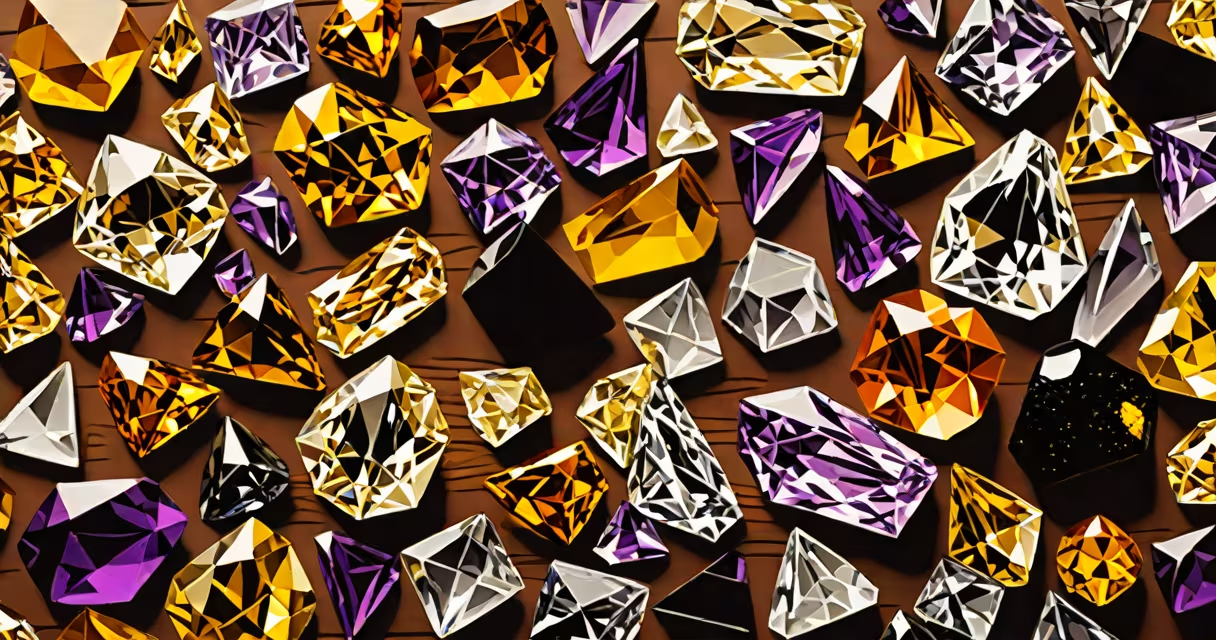
Crystals and what they mean refers to the belief that certain minerals carry energetic properties tied to their color, structure, and geological origin. These properties are attributed to emotional balance, mental clarity, or spiritual alignment in practices like crystal healing, meditation, and intentional placement.
Crystals form through slow cooling of molten rock or mineral-rich water over thousands to millions of years. Their atomic structure creates repeating geometric patterns visible in facets or cleavage planes. This internal order is central to how practitioners interpret their function. For example, clear quartz contains silicon and oxygen atoms arranged in a tetrahedral lattice, which some believe amplifies energy due to its piezoelectric nature-generating electric charge under pressure.
Modern interest in crystals grew during the 1960s and 1970s New Age movement, though references to stone-based healing appear in ancient Egyptian, Chinese, and Indigenous traditions. Today, crystal meanings are often derived from metaphysical texts, personal testimonials, and cultural associations rather than scientific validation. The National Center for Complementary and Integrative Health notes that while crystals are widely used for wellness, no clinical evidence supports their therapeutic effects beyond placebo.
Interpretations stem from four primary sources: color, mineral composition, historical use, and anecdotal reports. Color is the most accessible cue-red crystals like garnet are linked to vitality, while blue stones such as lapis lazuli are associated with calm and communication. But color alone doesn't determine meaning; it's combined with chemical makeup and formation context.
For instance, amethyst-a purple variety of quartz-is believed to promote peace and reduce stress. Its color comes from iron impurities and gamma radiation exposure during formation. According to the Mineralogical Society of America, this natural process alters electron states in the crystal lattice, creating the violet hue. Some users report feeling calmer after holding amethyst during mindfulness exercises, though controlled studies haven't confirmed these effects.
Historical context adds layers. Ancient Greeks wore carnelian to boost courage before battle. The Romans placed hematite near wounds to stop bleeding. These uses weren't based on science but on perceived qualities tied to appearance and availability. Modern crystal guides often cite these traditions, blending them with contemporary spiritual frameworks.
The following table outlines five widely recognized crystals, their physical traits, and common symbolic associations.
| Crystal | Color & Composition | Primary Meaning | Typical Use |
|---|---|---|---|
| Clear Quartz | Colorless; SiO₂ | Amplification, clarity, focus | Mediation, energy cleansing, intention setting |
| Amethyst | Purple; SiO₂ with Fe³⁺ | Calm, protection, spiritual insight | Bedside placement, stress reduction |
| Citrine | Yellow-orange; SiO₂ with Fe²⁺ | Confidence, abundance, joy | Wallets, workspaces, morning rituals |
| Black Tourmaline | Black; complex boron silicate | Grounding, protection from negativity | Worn as jewelry, placed near electronic devices |
| Rose Quartz | Pink; SiO₂ with Ti⁴⁺ | Loving-kindness, emotional healing | Heart chakra work, relationship intentions |
Each crystal's meaning is not universal. A person may feel deeply connected to rose quartz for emotional healing, while another finds no resonance. Personal experience plays a significant role. I once carried a piece of smoky quartz during a period of decision-making anxiety. After three weeks of keeping it in my pocket, I noticed reduced mental clutter-though I cannot confirm causation. Still, the consistency of the effect led me to continue using it as a grounding tool.
Many assume all crystals have equal energetic power. This is false. Size, purity, and cut affect perceived potency. A 10-carat raw amethyst may feel heavier and more stable than a 2-carat polished one, even if both are the same species. Energy is not measurable by standard instruments, so claims about "stronger vibrations" remain subjective.
Another error is conflating crystals with gemstones. All crystals are minerals, but not all gems are crystalline. Jade, for example, is a rock composed of interlocking fibers-not a single crystal. Opal displays a diffraction pattern but lacks long-range order, making it technically non-crystalline. Confusing these categories leads to misinterpretation of meaning.
A lesser-known point: some crystals are toxic. Malachite contains copper and can leach into skin or air if handled improperly. Selenite, while often used in meditation, can degrade into dust that irritates lungs. The American Society for the Prevention of Cruelty to Animals warns against placing crystals in pet environments due to ingestion risks. Always research safety before handling unfamiliar specimens.
While crystals aren't proven to treat medical conditions, they serve practical roles in daily life. People place citrine in home offices to encourage motivation. Athletes wear black tourmaline bracelets to stay focused during training. These uses are not about curing illness-they're about psychological anchoring.
Consider a study published in *PLOS ONE* (2021) that examined mindfulness practices involving tactile objects. Participants who touched smooth stones during breathing exercises reported higher attention retention than those who did not. While the stones weren't specified as crystals, the act of focusing on a physical object enhanced presence. This supports the idea that crystals function as tools for attention, not energy transmitters.
When choosing a crystal, consider intent, comfort, and sourcing. Ethically mined crystals avoid child labor and environmental harm. The Responsible Minerals Initiative provides guidelines for traceability. Avoid purchasing from vendors who claim "spiritual activation" without transparency about origin or processing.
Crystals and what they mean remains a blend of geology, culture, and personal belief. They are not scientifically validated healing agents, but they can serve as meaningful anchors in routines focused on awareness, intention, and emotional regulation.