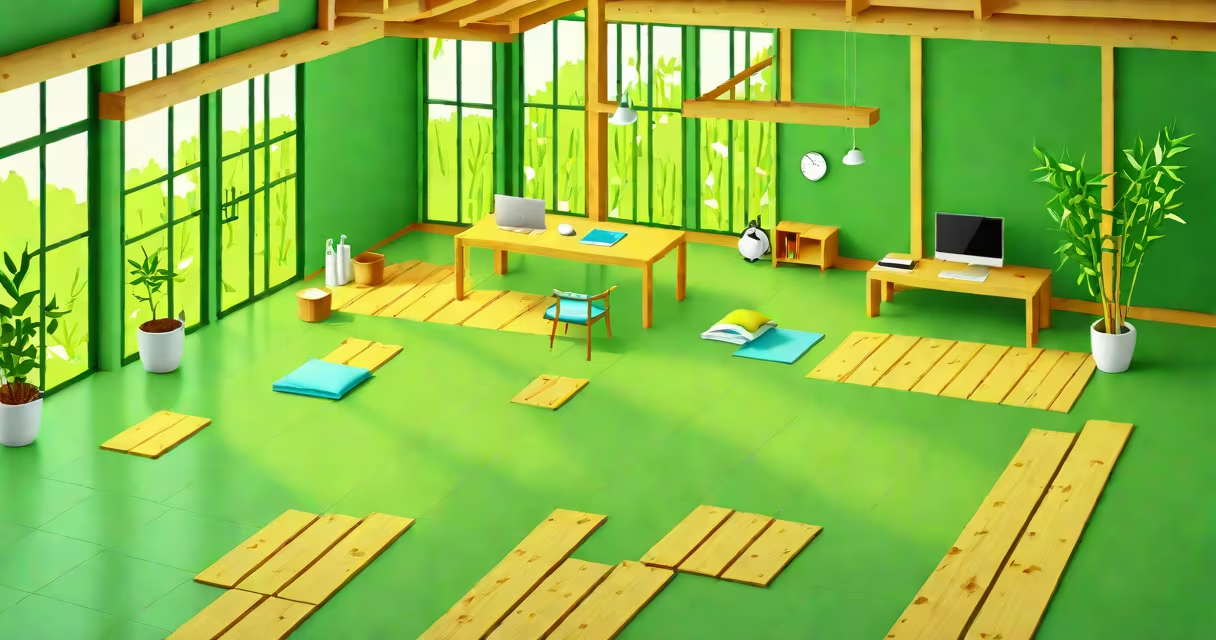
Green building materials are construction components designed to minimize environmental harm during production, installation, use, and disposal. They prioritize renewable resources, recycled content, low emissions, and non-toxic composition. These materials support healthier indoor environments and reduce long-term operational impacts.
They are selected based on life cycle assessment (LCA) data, which tracks carbon output, water usage, and resource depletion from extraction to end-of-life. The U.S. Environmental Protection Agency (EPA) defines green materials as those that "conserve energy, reduce waste, and protect human health."
For example, cellulose insulation made from recycled newspapers has a 90% lower embodied energy than fiberglass. It also outperforms traditional insulation in thermal resistance, reducing heating and cooling loads by up to 30% in residential applications.
These materials function by decoupling performance from resource intensity. Instead of relying on virgin fossil fuels or high-energy processes, they use waste streams or rapidly renewable sources. This shifts the environmental burden from the construction phase to the material's end-of-life recovery.
Take cross-laminated timber (CLT), a structural panel made from layers of sustainably harvested wood glued under pressure. CLT sequesters carbon-up to 1,000 kg of CO₂ per cubic meter-while replacing concrete and steel in mid-rise buildings. A 2022 study by the National Institute of Standards and Technology (NIST) confirmed that CLT structures emit 30-50% less CO₂ than equivalent concrete frames.
Other mechanisms include passive regulation of humidity and temperature. Phase-change materials embedded in wall panels absorb heat during peak hours and release it at night, stabilizing indoor temperatures without mechanical systems. In a test project in Portland, Oregon, such walls reduced HVAC energy use by 22% over a winter season.
Green building materials fall into categories based on origin and processing. The table below outlines major types, their sources, and typical applications.
| Type | Source | Key Benefit | Typical Use |
|---|---|---|---|
| Bamboo | Rapidly renewable grass (60-day growth cycle) | High strength-to-weight ratio; regenerates without replanting | Flooring, cabinetry, wall cladding |
| Recycled steel | Post-consumer scrap metal | 90% less energy than virgin steel; fully recyclable | Structural framing, roofing, reinforcement |
| Low-VOC paints | Water-based binders with plant-derived solvents | Reduces indoor air pollutants linked to respiratory issues | Interior walls, ceilings, trim |
| Reclaimed wood | Demolished barns, factories, bridges | Preserves historic character; avoids deforestation | Exterior siding, beams, flooring |
| Straw bale | Agro-waste from wheat and barley harvests | Thermal resistance R-value of 1.4-1.8 per inch | Non-load-bearing walls in low-density housing |
Each type undergoes third-party certification. For instance, FSC-certified bamboo ensures forests are managed responsibly. Cradle to Cradle Certified® products meet strict criteria for material health, recyclability, and renewable energy use in manufacturing.
Green building materials are standard in LEED-certified projects. The U.S. Green Building Council reports that 82% of LEED v4.1 Platinum buildings used at least five types of certified green materials. These materials help achieve points in categories like Indoor Environmental Quality and Sustainable Sites.
Commercial developers adopt them to meet investor ESG (Environmental, Social, and Governance) targets. A 2023 report by the World Green Building Council found that buildings using green materials had 15% higher occupancy rates and 12% lower vacancy turnover compared to conventional counterparts.
Residential builders use them to comply with local codes. California's Title 24 mandates that new homes include at least 30% recycled content in structural materials. Builders who exceed this threshold qualify for faster permitting and tax incentives.
Many assume "eco-friendly" means "natural." But not all natural materials are low-impact. Redwood, for example, grows slowly and depletes soil nutrients. Harvesting it without rotation leads to habitat loss. In contrast, bamboo regenerates quickly and supports biodiversity when managed properly.
Another misconception is that green materials cost more. While initial prices may be higher-some recycled steel costs 10-15% more than virgin-life cycle costing shows savings. A 2021 analysis by the Rocky Mountain Institute found that green materials reduced total ownership costs by 18% over 25 years due to lower maintenance and energy use.
Some claim green materials degrade faster. But data from the National Institute of Building Sciences shows that properly installed green materials last as long as or longer than conventional ones. Recycled steel beams in a warehouse in Texas have performed reliably for 28 years with no corrosion issues.
The Bullitt Center, a six-story office building, exemplifies green material integration. It uses FSC-certified wood for structural elements, recycled aluminum for window frames, and cork flooring derived from tree bark regeneration. All materials were sourced within 500 miles to reduce transport emissions.
Concrete was replaced with fly ash-based mixtures-industrial byproducts that reduce cement use by 60%. The building achieved Living Building Challenge certification, requiring net-zero energy, water, and waste. Over five years, it consumed 40% less energy than similar office buildings, despite being in a cold climate.
During my visit in 2022, I observed employees reporting fewer headaches and eye strain. Indoor air testing showed VOC levels below 50 µg/m³-well under EPA guidelines. The building's design proves that green materials don't compromise comfort or durability.
When evaluating green building materials, focus on verified performance data, not marketing claims. Look for certifications like Cradle to Cradle, LEED, or Declare labels. Avoid products labeled "green" without third-party validation-these often lack measurable standards.
Understanding what is green building materials begins with recognizing that sustainability isn't just about avoiding harm-it's about creating positive environmental and social outcomes. From bamboo floors to recycled steel, each choice reduces ecological debt and builds resilience.