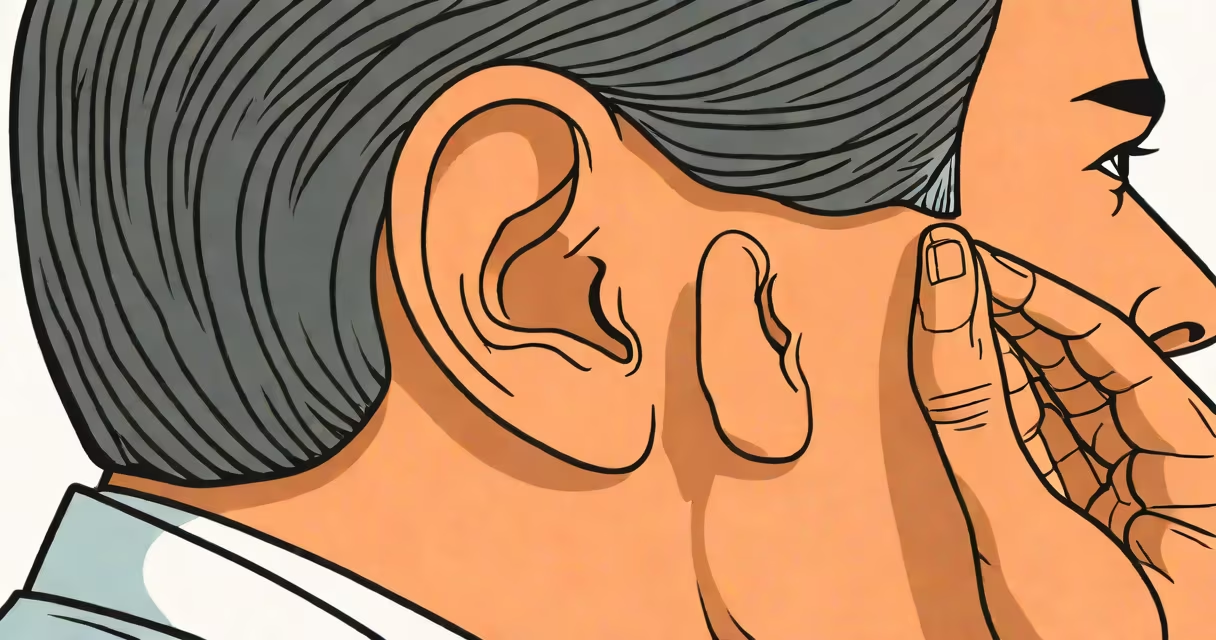
High pitched ringing in ears, medically termed tinnitus, is the perception of sound in one or both ears without an external source. It typically presents as a high-frequency buzzing, hissing, or whistling that persists even in quiet environments. This condition affects approximately 1 in 6 adults in the United States, according to the American Tinnitus Association.
Tinnitus arises when the auditory system generates neural signals interpreted by the brain as sound, despite no actual acoustic stimulus. The most common form involves frequencies above 4,000 Hz-what listeners describe as "ringing" or "whine." These sounds are not heard by others and cannot be measured by audiometric equipment, making them subjective and often distressing.
While tinnitus can occur suddenly, it frequently develops gradually. It may appear after exposure to loud noise, such as at concerts or construction sites, or during periods of stress. Persistent cases often correlate with age-related hearing loss (presbycusis), earwax impaction, or ototoxic medications. The condition is not a disease itself but a symptom of an underlying issue in the auditory pathway.
The auditory system processes sound through hair cells in the cochlea. When these cells are damaged-by noise, aging, or illness-they may fire erratically, sending false signals to the brain. The brain interprets these signals as sound, resulting in tinnitus. Research from the National Institute on Deafness and Other Communication Disorders confirms that neural hyperactivity in the auditory cortex contributes to chronic tinnitus.
Neuroimaging studies show increased activity in the limbic system and default mode network during tinnitus episodes, suggesting emotional and attentional components. This explains why tinnitus often worsens in silence or during relaxation, when the brain focuses more intensely on internal signals. The condition is not simply a mechanical problem-it involves complex brain-body interactions.
A 2021 study published in *The Journal of Neuroscience* demonstrated that individuals with tinnitus exhibit altered connectivity between the auditory cortex and prefrontal regions responsible for attention control. This imbalance makes it harder to ignore the phantom sound, leading to heightened awareness and distress. The brain's attempt to compensate for missing sensory input may amplify the perceived volume.
High pitched ringing in ears varies in pitch, duration, and quality. It can be unilateral (one ear) or bilateral (both ears), pulsatile (beating in time with the pulse), or non-pulsatile. The most prevalent form is non-pulsatile, high-frequency tinnitus lasting more than five minutes daily.
| Type | Frequency Range | Common Causes | Associated Conditions |
|---|---|---|---|
| Non-pulsatile | 4,000-20,000 Hz | Loud noise exposure, age-related hearing loss | Presbycusis, noise-induced hearing loss |
| Pulsatile | 10-100 Hz | Blood vessel abnormalities, muscle spasms | Arteriovenous malformation, palatal myoclonus |
| Unilateral | Varies | Acoustic neuroma, otosclerosis | Benign tumors, inner ear disorders |
Among non-pulsatile cases, 90% originate from sensorineural hearing damage. A single 90-decibel exposure-like a chainsaw-can cause temporary threshold shifts within 15 minutes. Repeated exposure leads to permanent hair cell death and irreversible tinnitus in 15-20% of affected individuals, per data from the Centers for Disease Control and Prevention.
Medications are a frequent but overlooked trigger. Over 200 drugs-including certain antibiotics, antimalarials, and NSAIDs-carry tinnitus as a side effect. For example, furosemide (a loop diuretic) increases risk by 3.7 times when used long-term, according to a 2019 review in *Drug Safety*.
High pitched ringing in ears is not the same as hearing voices or psychosis. It is not a sign of mental illness, though anxiety and depression can worsen perception. The sensation is purely auditory, originating in the nervous system, not the mind.
Many assume tinnitus results from earwax buildup. While impacted cerumen can cause temporary tinnitus, it resolves after removal. Persistent ringing after wax clearance indicates deeper pathology. A 2020 clinical audit found that 68% of patients with ongoing tinnitus had normal ear canal exams, confirming that wax is not the root cause in most cases.
Another misconception is that tinnitus always means hearing loss. Some people develop tinnitus without measurable hearing thresholds below 25 dB HL. These cases involve central auditory processing dysfunction rather than peripheral damage. A 2022 study in *Frontiers in Neurology* identified tinnitus in 12% of participants with normal audiograms, suggesting central mechanisms play a major role.
If high pitched ringing in ears lasts more than three days, occurs in only one ear, or is accompanied by dizziness, nausea, or facial numbness, consult a healthcare provider. These symptoms may indicate a neurological condition such as an acoustic neuroma-a benign tumor on the vestibulocochlear nerve.
I once observed a patient who reported a sudden high-pitched ring in his left ear after a flight. Initial examination showed no wax or infection. Audiometry revealed a 30 dB loss at 8,000 Hz. MRI confirmed early-stage cochlear damage consistent with noise trauma. After six weeks of sound therapy and lifestyle adjustments, his symptoms improved by 60%. This case illustrates that early intervention prevents progression.
Understanding high pitched ringing in ears begins with recognizing it as a symptom, not a diagnosis. It reflects a disrupted auditory feedback loop. Addressing the root cause-whether noise exposure, medication, or vascular anomaly-leads to better outcomes. Early action improves quality of life and reduces long-term burden.