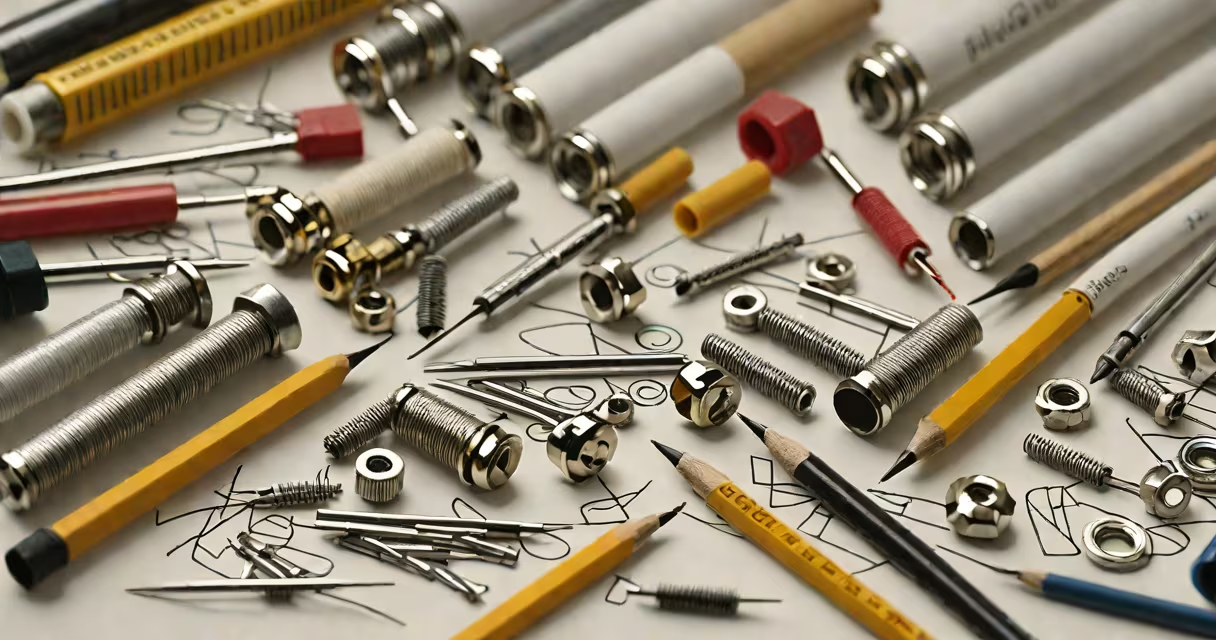
Sundries in construction are small, non-structural materials and accessories used during building projects that don't qualify as major components or primary building elements. These include fasteners, sealants, connectors, gaskets, insulation tapes, and other minor hardware essential for assembly, sealing, and finishing.
These items are often grouped under "miscellaneous supplies" in project documentation. While individually low-cost, their collective impact on labor efficiency, material tracking, and project budget is significant. A single residential build may require 200+ distinct sundry items, each contributing to installation integrity and compliance with building codes.
For example, a drywall installation requires drywall screws (typically #6 x 1-1/4"), joint compound, mesh tape, sandpaper, and plastic corner beads. None of these are structural, yet omitting any leads to poor finish quality, rework, and delays. The term "sundries" reflects their role as supporting elements rather than load-bearing parts.
Sundries serve functional roles across all phases of construction. During framing, nails, screws, washers, and metal connectors secure joists, studs, and rafters. In electrical work, wire nuts, conduit clamps, and grounding clips ensure safe connections. Plumbing installations rely on pipe thread sealant, O-rings, and compression fittings. Finishing stages use caulk, grout, adhesive pads, and trim fasteners.
These items are typically specified in the project's bill of materials (BOM) and included in the takeoff process. A takeoff in construction involves measuring quantities from blueprints to estimate material needs. Sundries are often overlooked in initial estimates due to their low unit cost, but their cumulative effect appears in change orders and site shortages.
One job site manager reported that missing a single box of 1-inch lag bolts delayed a deck installation by two days because the crew had to wait for delivery. The bolt cost $1.20 each, but the delay added $380 in labor costs. This illustrates how sundries affect project timelines despite their individual insignificance.
Construction sundries fall into several functional categories, each serving a specific purpose:
| Type | Examples | Typical Use Case |
|---|---|---|
| Fasteners | Nails, screws, bolts, washers, anchors | Securing framing, decking, cabinetry |
| Sealing & Insulation | Caulk, foam sealant, gasket kits, tape | Weatherproofing joints, windows, doors |
| Electrical Components | Wire nuts, conduit straps, grounding clips | Wiring junctions, cable management |
| Plumbing Fittings | O-rings, PTFE tape, compression fittings | Preventing leaks in pipe joints |
| Finishing Hardware | Trim screws, corner beads, adhesive pads | Final touches on drywall, baseboards, tiles |
Some sundries are standardized across projects. For instance, #8 x 1-1/2" drywall screws are used universally in interior wall assembly. Others are project-specific. A custom millwork installation may require 37 unique screw sizes and lengths, each sourced from a specialty supplier.
A lesser-known fact: many sundries are subject to regulatory standards. For example, electrical wire nuts must meet UL 486B certification. Using unapproved fasteners in fire-rated walls can void insurance coverage. Contractors who skip compliance checks risk liability during inspections.
Many project managers treat sundries as "low priority" items. They're not visible in progress photos, not listed in high-value equipment logs, and rarely appear in formal reports. This leads to inaccurate procurement planning and frequent last-minute purchases.
One common mistake is assuming sundries are interchangeable. A contractor once substituted a standard plastic washer for a neoprene gasket in a plumbing connection. The result was a slow leak that went undetected for six weeks, causing water damage and mold growth. The original gasket cost $0.45; the repair cost $1,800.
Another confusion arises between sundries and consumables. Consumables like paint, primer, and cleaning solvents are used up during work. Sundries are not consumed-they're installed and remain part of the structure. A nail stays in place; paint doesn't. Confusing the two leads to incorrect inventory tracking and waste.
Consider a kitchen remodel involving demolition, new cabinetry, countertop installation, and flooring replacement. The project team identified 147 sundry items through a detailed takeoff. Among them:
The total cost of these sundries was $1,287.40-just 1.3% of the $98,000 project budget. Yet, failing to order them led to three days of idle time while waiting for delivery. The project manager later noted that "the smallest items caused the biggest delays."
Proper tracking of sundries improves project outcomes. Using a digital inventory system integrated with the takeoff software helps all items are accounted for before ordering. This reduces on-site shortages and prevents costly rush deliveries.
Sundries in construction are not trivial. They are essential to the performance, safety, and longevity of structures. Their oversight leads to rework, schedule slippage, and increased costs. Effective project management includes treating sundries with the same attention as larger materials.
When estimating, include sundries in the initial takeoff. Use a checklist based on trade-specific requirements-e.g., a plumbing checklist includes PTFE tape, O-rings, and union nuts. Assign responsibility for procurement to a dedicated site supervisor, not just the field crew.
Finally, avoid assuming that low unit cost equals low importance. A single missing screw can prevent a door from latching properly. A failed sealant application can lead to moisture intrusion. The integrity of a building depends on the sum of its smallest parts.