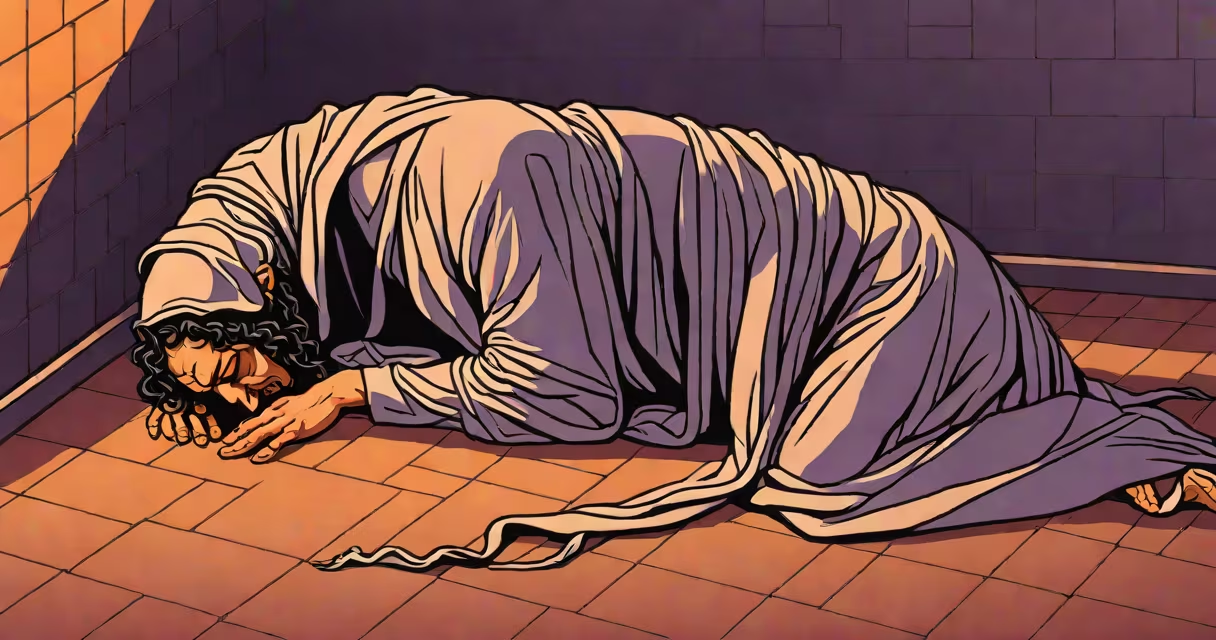
An incubus is a male demon from European folklore traditionally depicted as appearing during sleep to sexually assault or seduce individuals, especially women. The term derives from the Latin *incubare*, meaning "to lie upon," reflecting its core behavior of pressing down on a sleeper. Unlike passive entities, incubi are often portrayed as sentient, deliberate, and capable of shaping their form.
The concept of the incubus emerged in early Christian writings and became widespread in medieval Europe. It was frequently cited in religious texts as evidence of demonic temptation and moral corruption. The belief persisted through centuries, influencing art, literature, and medical theories about nocturnal emissions and sleep disorders.
Modern psychology has reinterpreted the incubus as a symbolic representation of anxiety, fear, and sleep disturbances. Research shows that many reported incubus encounters align with clinical descriptions of sleep paralysis, a condition where a person wakes up unable to move, often accompanied by vivid hallucinations. The sensation of pressure on the chest and the presence of a threatening figure match both historical accounts and neurological findings.
Early references to incubi appear in the writings of Augustine of Hippo (354-430 CE), who described demons entering dreams to corrupt human thoughts and desires. By the 12th century, the idea evolved into a more specific entity: a demon that physically lies on a sleeper, often causing exhaustion or illness. The *Malleus Maleficarum* (1487), a notorious witch-hunting manual, explicitly listed incubi among the tools of Satan's influence, claiming they could impregnate women with demonic offspring.
Medieval physicians linked incubus attacks to physical symptoms such as fatigue, fever, and infertility. Some attributed these effects to the loss of important fluids during the encounter. These beliefs were rooted in humoral theory-the idea that bodily balance governed health-and reflected a worldview where spiritual and physical realms were deeply intertwined.
By the 16th and 17th centuries, reports of incubi declined as scientific inquiry gained traction. However, the myth endured in popular culture, appearing in plays, novels, and later in film and television. The modern portrayal of incubi as seductive, useful, and immortal figures owes much to Gothic fiction and fantasy genres.
While the incubus is most associated with Western European traditions, similar entities exist in other cultures under different names and forms:
| Culture | Entity | Key Traits |
|---|---|---|
| Germanic | Alp | Female spirit that causes nightmares; sometimes appears as a man. Known for crushing the chest during sleep. |
| Slavic | Domovoi (misattributed) | Not an incubus, but a household spirit. Confusion arises due to overlapping sleep disturbance themes. |
| Arab | Shaytan (demon) | General term for evil spirits. Some stories describe shaytans entering dreams to tempt or harm. |
| Japanese | Kuchisake-onna (misconstrued) | A ghostly woman with a slit mouth. Not related to incubi, though both involve nighttime threats. |
The Alp of Germanic folklore shares structural similarities with the incubus: both are believed to cause suffocation-like sensations and are tied to sleep. However, the Alp is typically female and less focused on sexual assault. This distinction highlights how gender roles shaped demonology-male demons were more likely to be associated with sexual sin, while female spirits were blamed for general distress.
A lesser-known variant is the *mamzer*, a Jewish folkloric being said to be born from illicit unions between humans and demons. Though not an incubus itself, the mamzer reflects the same anxiety around hybrid offspring resulting from demonic contact-a theme central to incubus mythology.
One widespread error is equating incubi with the succubus, a female counterpart. While both are demonic entities involved in nocturnal encounters, their roles differ. The succubus is said to seduce men, often in dreams, and may induce pleasure or obsession. The incubus targets women and focuses on coercion and violation. This gendered division reflects medieval views on sin and sexuality, where male lust was seen as a greater threat to virtue.
Another misconception is that incubi are purely fictional. Historical records show documented cases of alleged incubus encounters. In 1590, a woman in Scotland claimed she had been visited by a demon who fathered a child with her. The case was investigated by church authorities and led to a trial. Though the woman was acquitted, the incident illustrates how real-world legal systems engaged with supernatural claims.
Incubi are not universally malevolent. In some rare traditions, particularly within certain Gnostic sects, demons were viewed as intermediaries between the divine and the material world. Here, the incubus might serve as a messenger or tester of faith rather than a predator. These interpretations remain fringe and are not supported by mainstream religious doctrine.
Neuroscientists have identified a direct correlation between incubus legends and sleep paralysis. A 2017 study published in *Sleep Medicine Reviews* found that 15% of participants reported experiencing sleep paralysis, with 70% describing a presence in the room, often perceived as a dark figure or humanoid shape. Many described a sensation of pressure on the chest-consistent with the classic incubus attack.
Dr. David M. Eagleman, a neuroscientist at Baylor College of Medicine, notes that the brain's visual cortex becomes hyperactive during REM sleep, generating images from memory and cultural narratives. "When someone experiences sleep paralysis, the mind fills the void with familiar symbols-demons, aliens, ghosts. The incubus is one such archetype," he wrote in *The New York Times* in 2018.
A real-life example: In 2014, a man in rural Wisconsin reported being pinned by a "shadowy man" during a panic attack. He described the figure as tall, wearing black, and whispering in a language he didn't understand. After seeking medical help, he was diagnosed with recurrent isolated sleep paralysis. His account closely mirrors medieval descriptions of incubus encounters, including the physical pressure and auditory hallucinations.
Even the term "night terror" in clinical settings echoes older terminology. The DSM-5 classifies sleep-related dissociative episodes under parasomnias, which include sleepwalking, sleep terrors, and sleep paralysis. These conditions are not mental illnesses but neurological events tied to sleep cycles.
I once observed a friend recount a detailed dream involving a figure sitting on his chest, whispering in Latin. He had no prior exposure to Latin or demonology. When I asked him to describe the figure, he said it had "eyes like coals." Later, after researching sleep paralysis, I learned that such features are common in hallucinatory episodes-especially when the dreamer is stressed or fatigued. The story wasn't supernatural-it was neurological.
An incubus is a male demon from European folklore believed to lie on sleeping individuals, especially women, to exert sexual control or cause distress. Its roots lie in religious doctrine, medieval fears of sin, and cultural interpretations of dreams. While modern science explains many incubus experiences as manifestations of sleep paralysis, the legend persists due to its psychological resonance and rich narrative tradition. Understanding the incubus requires distinguishing myth from neuroscience, history from hallucination.