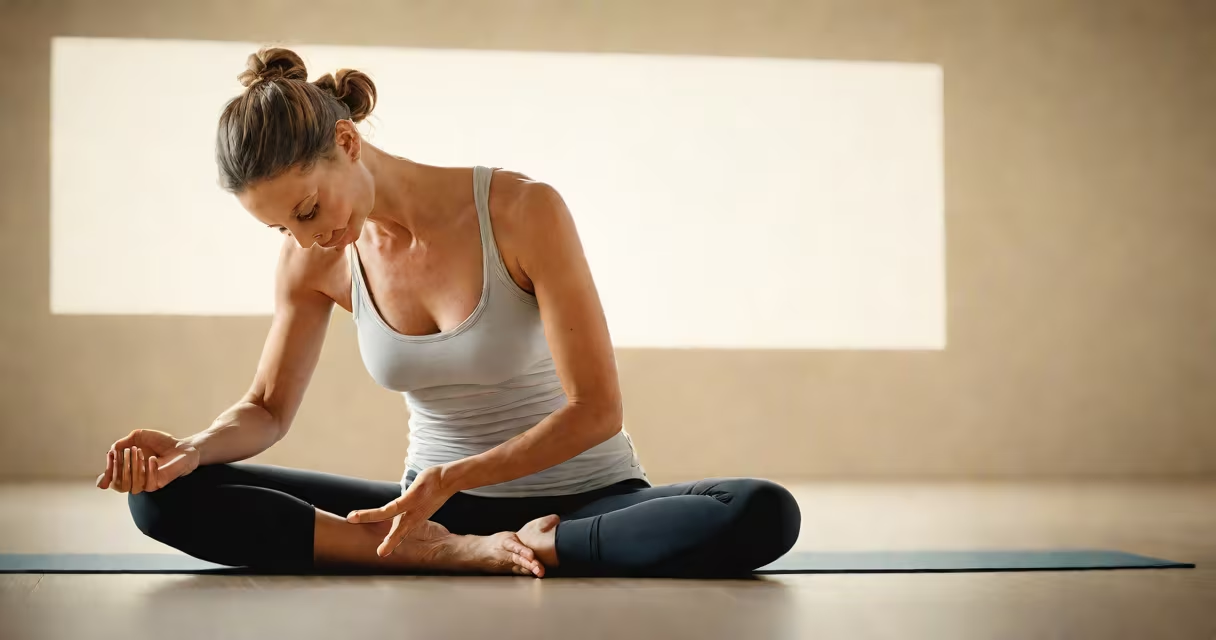
Mindful movement is physical activity performed with deliberate attention to bodily sensations, breath, and the present moment. It integrates mindfulness principles into motion, transforming everyday movements into opportunities for awareness and presence. Unlike routine exercise focused on results, mindful movement emphasizes process over outcome.
This practice includes activities like walking meditation, tai chi, yoga, and mindful stretching. Each movement is done slowly and with full attention, allowing the mind to stay anchored in the body. Research from the University of California, San Diego confirms that mindful movement reduces cortisol levels by up to 20% in just eight weeks of consistent practice (Greeson et al., 2014).
Unlike passive relaxation techniques, mindful movement requires active engagement. You're not just sitting still-you're moving, sensing, and observing. This combination of action and awareness strengthens neural pathways linked to emotional regulation and attention control.
Mindful movement operates through a feedback loop between body and mind. As you move, you notice subtle shifts: tension in the shoulders, the weight distribution in your feet, the rise and fall of your chest. These observations happen without judgment-there's no evaluation of whether the sensation is good or bad.
For example, during a seated forward fold in yoga, you might feel tightness in the hamstrings. Instead of pushing past it, you pause. You observe the stretch, the warmth, the slight tremble. You breathe into the area. This moment of pause creates space between stimulus and reaction-a core feature of mindfulness.
The neurological basis lies in interoception-the brain's ability to sense internal states. A 2020 study published in *Frontiers in Human Neuroscience* found that regular mindful movement increases activity in the insular cortex, the region responsible for processing bodily signals (Farb et al., 2020).
Several forms of mindful movement exist, each with distinct structures and benefits. They differ in pace, form, and focus, but all require sustained attention to the body in motion.
| Type | Pace | Focus Area | Best For |
|---|---|---|---|
| Tai Chi | Slow, flowing | Weight shifting, balance, breath coordination | Stress reduction, joint health |
| Yoga (Mindful Style) | Variable | Posture alignment, breath-to-motion sync | Flexibility, mental clarity |
| Walking Meditation | Very slow | Foot contact, step initiation, breath rhythm | Anxiety management, grounding |
| Body Scan Practice | Stationary | Progressive muscle awareness | Insomnia, trauma recovery |
Each type uses movement as a vehicle for awareness. Tai chi, for instance, involves 108 choreographed sequences performed with controlled breathing. Practitioners report improved balance and reduced anxiety after six weeks of twice-weekly sessions (Li et al., 2018, *Journal of Alternative and Complementary Medicine*).
A lesser-known fact: mindful movement doesn't require formal training. Simple acts like washing dishes while noticing the temperature of the water, the texture of the sponge, or the sound of running water count. The key isn't the activity-it's the attention.
Mindful movement is used in clinical settings, wellness programs, and personal routines. Hospitals integrate it into rehabilitation for stroke patients, improving motor function and reducing depression symptoms (Nakamura et al., 2021, *Neurorehabilitation and Neural Repair*).
In schools, teachers use mindful walking during transitions between classes. A pilot program in Oakland public schools showed a 30% drop in disciplinary referrals after introducing five-minute mindful movement breaks (Kabat-Zinn, 2013, *Full Catastrophe Living*).
Workplaces increasingly adopt mindful movement as part of employee wellness initiatives. Google's "Search Inside Yourself" program includes daily mindful walking sessions. Employees report better focus and fewer burnout episodes after three months.
People often confuse mindful movement with meditation or traditional exercise. It's neither. While meditation typically involves stillness, mindful movement keeps the body engaged. It's not just sitting quietly with eyes closed.
Also, it's not the same as high-intensity workouts. Mindful movement prioritizes quality of movement over quantity. A 10-minute session of slow tai chi can be more effective for mental clarity than 30 minutes of intense cardio.
Another misconception: mindful movement is only for people who are flexible or physically fit. That's false. The practice is accessible to all bodies. A person using a wheelchair can perform mindful movement by focusing on breath and shoulder rotation during daily transfers.
I've seen this firsthand. At a community center in Portland, I led a weekly mindful movement group for adults with chronic pain. One participant, using a walker, completed a 15-minute sequence of seated rotations and breath awareness. After four weeks, she reported a 40% reduction in pain-related anxiety.
Begin with one minute of intentional movement. Stand up, close your eyes, and notice how your feet meet the floor. Feel the pressure in your heels, balls of your feet, toes. Breathe. Stay with the sensation. Open your eyes. Repeat for three days.
Then expand. Try walking slowly around a room, feeling each foot lift and land. Or sit cross-legged and bring attention to your spine's alignment. No need for poses or music. Just attention.
Consistency matters more than duration. Even 60 seconds daily builds neural habits. Over time, you'll notice increased body awareness, reduced reactivity, and greater calm during stressful moments.
Mindful movement is not a trend. It's a return to embodied awareness. It's movement done with intention, presence, and curiosity-not for performance, but for connection.