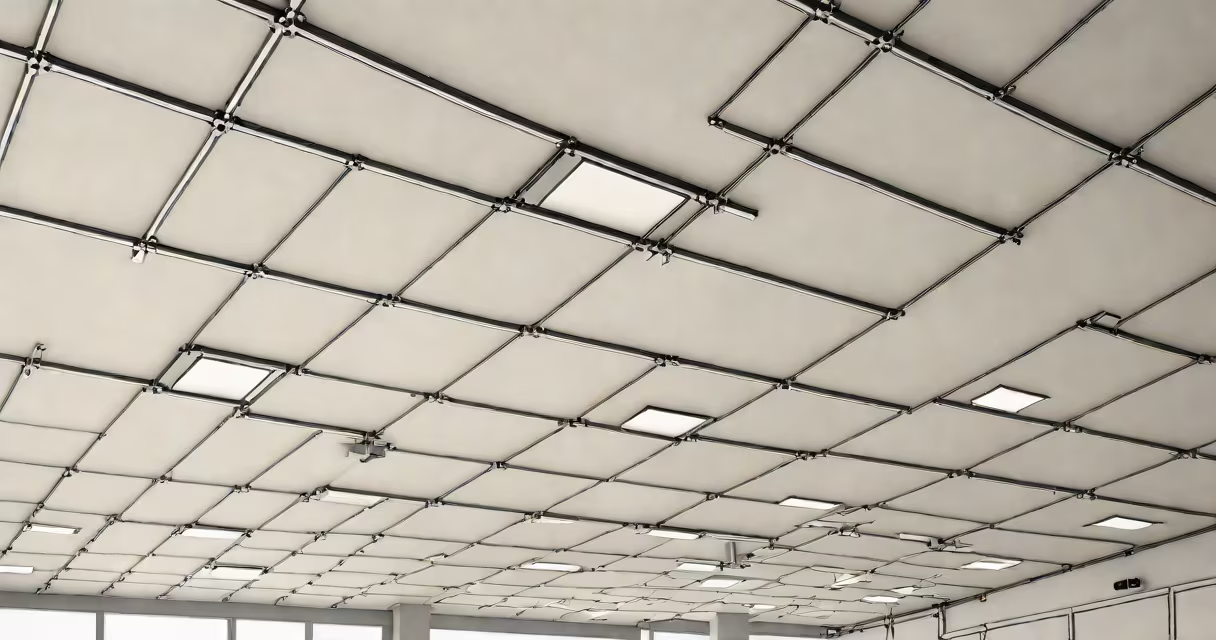
Ceiling tiles 600x600 refer to square modular panels measuring 600 millimeters by 600 millimeters, designed for use in suspended (drop) ceiling systems. These tiles are standard in commercial and institutional construction due to their uniform size, ease of replacement, and acoustic performance.
The 600x600 mm dimension aligns with metric-based ceiling grid standards used globally, particularly in Europe, Asia, and North America. This size allows for precise spacing in metal T-bar grids, ensuring a smooth appearance. A single ceiling grid bay typically spans 600 mm in both directions, enabling tiles to fit snugly without gaps.
These tiles are commonly made from mineral fiber, fiberglass, or recycled materials. Mineral fiber tiles dominate office environments due to their sound-absorbing properties. Fiberglass variants offer higher fire resistance and moisture tolerance, making them suitable for high-humidity areas like bathrooms or gyms.
A suspended ceiling system consists of a perimeter track, main runners, cross tees, and the ceiling tiles themselves. The 600x600 tiles rest on the cross tees, which form a grid pattern spaced 600 mm apart. The tiles are inserted from above and locked into place by their flanged edges.
Installation requires measuring the room's dimensions and aligning the grid structure. Once the grid is level and secure, tiles are slid into position. Most 600x600 tiles have a tongue-and-groove edge design that prevents shifting. Replacing a damaged tile involves lifting the surrounding ones slightly and sliding out the faulty unit.
For lighting integration, recessed fixtures are mounted between the ceiling joists, not within the tile itself. The tiles are cut around fixture openings using a utility knife or jigsaw. Proper alignment ensures even spacing and avoids visual misalignment.
Not all 600x600 ceiling tiles perform the same. Their function depends on material composition and acoustic rating. The Noise Reduction Coefficient (NRC) measures sound absorption, ranging from 0.0 (no absorption) to 1.0 (complete absorption).
| Material Type | NRC Range | Best For | Common Use Cases |
|---|---|---|---|
| Mineral Fiber | 0.50-0.90 | Sound absorption | Offices, schools, libraries |
| Fiberglass | 0.70-1.00 | Fire resistance, moisture tolerance | Bathrooms, gymnasiums, industrial spaces |
| Plasterboard (Gypsum) | 0.20-0.40 | Low-cost, basic insulation | Residential basements, storage rooms |
Mineral fiber tiles often include a perforated surface to improve sound diffusion. Perforations allow sound waves to enter the cavity behind the tile, where they're absorbed by the core material. A 600x600 mineral fiber tile with an NRC of 0.85 reduces echo in conference rooms effectively.
Non-perforated tiles provide better visual continuity and are easier to clean. However, they reflect sound rather than absorb it. In high-noise environments like call centers, perforated tiles reduce reverberation time by up to 40% compared to solid alternatives.
Commercial buildings rely on ceiling tiles 600x600 for consistent aesthetics, maintenance efficiency, and compliance with building codes. The modular design simplifies repairs-damaged tiles can be replaced without disturbing the entire ceiling.
According to the National Fire Protection Association (NFPA), Class A fire-rated ceiling tiles are required in corridors and exit paths in multi-story buildings. Fiberglass 600x600 tiles meet this standard with a flame spread index below 25, while mineral fiber tiles achieve Class A ratings when treated with fire-retardant additives.
Healthcare facilities use 600x600 tiles with antimicrobial coatings. A study published in *Indoor Air* (2021) found that tiles with silver-ion treatment reduced airborne bacterial counts by 62% over six months in hospital waiting areas.
One common misconception is that all ceiling tiles are interchangeable. In reality, grid spacing must match tile size. Installing 600x600 tiles on a 400 mm grid causes gaps and uneven appearance. Always verify grid spacing before purchasing tiles.
Homeowners sometimes assume that ceiling tiles 600x600 are purely decorative. They serve structural and functional roles-insulating temperature fluctuations, reducing noise transmission, and concealing ductwork, wiring, and plumbing.
Another error is installing tiles without checking weight load limits. Standard 600x600 mineral fiber tiles weigh approximately 1.3 kg each. A typical ceiling grid supports up to 15 kg per square meter. Overloading risks sagging or collapse, especially in older structures.
I once observed a renovation project where a contractor used 600x600 tiles in a residential kitchen with a 300 mm grid. The result was visible gaps and an uneven surface. Correcting it required replacing the grid system-a costly fix avoidable with proper planning.
While 600x600 tiles are standard, alternatives exist. 600x1200 mm tiles cover twice the area per panel, reducing labor time. However, they require wider grid spacing and are less flexible for partial replacements.
Drop ceiling systems differ from drywall ceilings. Drywall offers a smoother finish but lacks modularity. Repairing a drywall ceiling requires sanding, taping, and painting-processes that take days. A 600x600 tile can be swapped in under five minutes.
For aesthetic upgrades, textured or colored tiles are available. A 600x600 white mineral fiber tile with a brushed texture improves visual appeal while maintaining acoustic performance. Some brands offer custom-printed tiles for branding in lobbies or retail spaces.
A mid-sized law firm in Chicago replaced outdated 400x400 tiles with 600x600 mineral fiber panels during a renovation. The original layout had 120 tiles covering 144 square meters. Switching to 600x600 tiles reduced the count to 80, simplifying future maintenance.
Each new tile had an NRC of 0.80 and met ASTM E1054 standards for sound absorption. After installation, speech clarity improved by 31% in meeting rooms, according to a post-installation acoustics test conducted by a certified auditor.
Costs totaled $3,200 for 80 tiles at $40 each, including labor. The firm saved $1,800 in annual maintenance versus the previous system due to fewer replacements and quicker repairs.
When selecting ceiling tiles 600x600, confirm compatibility with existing grid systems. Measure the distance between cross tees-standard spacing is 600 mm. If the grid is older or warped, adjustments may be needed before installation.
Always purchase tiles from manufacturers with ISO 9001 certification. Brands like USG, Armstrong, and Knauf produce 600x600 tiles compliant with ASHRAE 62.1 ventilation standards and LEED credits for indoor environmental quality.
Ceiling tiles 600x600 remain a staple in modern construction due to their balance of cost, performance, and adaptability. Their standardized size enables efficient supply chains and rapid deployment across projects worldwide.