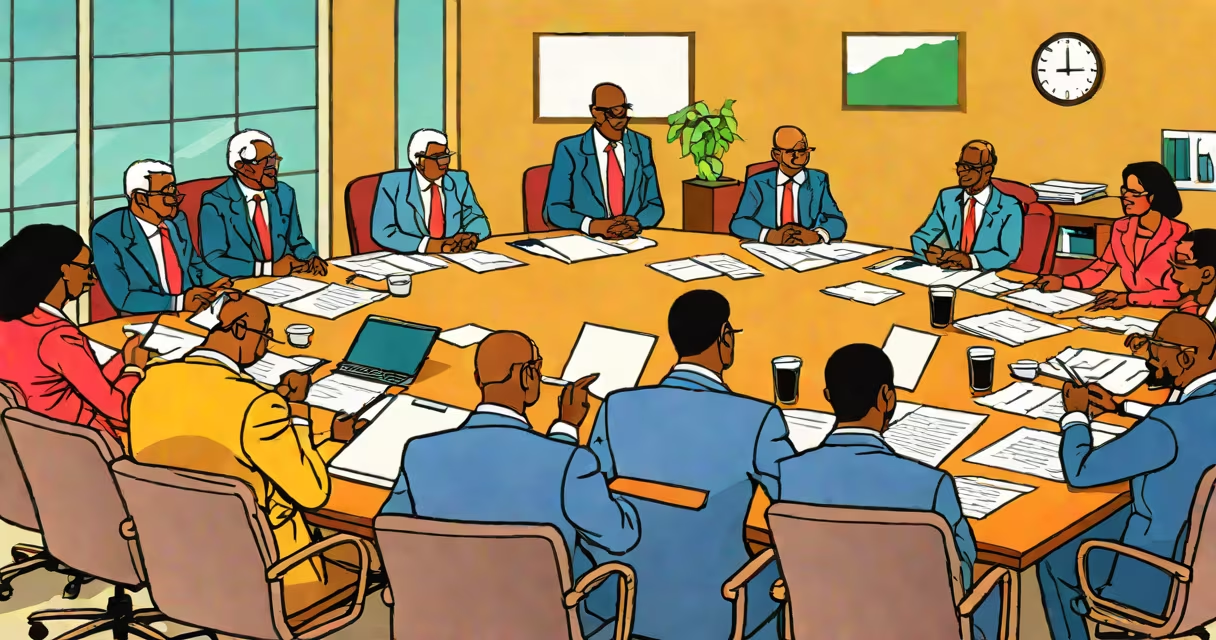
A nonprofit board of directors is a governing body elected by an organization's members or appointed by its founders to oversee strategy, finances, legal compliance, and mission integrity. It holds fiduciary responsibility and ensures the organization operates in accordance with its stated purpose and state laws.
The board is not involved in daily operations but sets long-term goals, approves budgets, hires and evaluates the executive director, and ensures transparency. Its decisions bind the organization legally. A single misstep-like approving a conflict of interest or mismanaging funds-can result in loss of tax-exempt status under IRS Code Section 501(c)(3).
According to the National Council of Nonprofits, a board must act in the best interest of the organization, not individual members. This duty includes oversight of risk, fundraising ethics, and adherence to bylaws. Failure to fulfill these duties may lead to personal liability for board members.
Boards operate through regular meetings-typically quarterly-with agendas focused on strategy, financial reports, and policy decisions. Minutes are kept and stored as official records. Decisions require a majority vote unless the bylaws specify otherwise.
Each board member brings unique skills. Some contribute expertise in finance, law, or marketing. Others offer connections to donors, government agencies, or community groups. The ideal mix balances independence, diversity, and institutional knowledge.
For example, a small arts nonprofit in Portland, Oregon, had a board composed of two accountants, a former city planner, a retired teacher, and a local business owner. Over 18 months, they approved a $75,000 grant proposal, hired a new executive director, and revised the organization's bylaws to include term limits. Their actions were documented in minutes and reviewed annually by an independent auditor.
Most nonprofit boards consist of 5 to 15 members. Size depends on the organization's scale, mission complexity, and geographic reach. Small nonprofits often have 5-7 members; large national organizations may have 12-20.
Board roles typically include:
Some boards create standing committees-such as Finance, Governance, or Fundraising-to delegate responsibilities. These groups report back to the full board. A committee structure reduces workload and improves focus.
| Role | Typical Number | Key Responsibility |
|---|---|---|
| Board Chair | 1 | Facilitates meetings, leads strategic planning |
| Secretary | 1 | Keeps records, manages communications |
| Treasurer | 1 | Reviews financial statements, approves spending |
| General Members | 5-12 | Participate in voting, serve on committees |
Term limits are common. A board in New York City requires members to serve no more than three consecutive two-year terms. This prevents stagnation and encourages fresh perspectives.
Many people assume the board runs day-to-day operations. That is incorrect. The board governs; staff execute. Confusing the two leads to burnout and poor decision-making. For example, a California-based environmental group saw a 40% drop in volunteer engagement after the board began micromanaging outreach campaigns. Leadership was restored only after clarifying roles.
Another misunderstanding: that board members must be paid. They are not. While some nonprofits offer modest stipends for travel or time, most board service is unpaid. The IRS defines board members as volunteers under Section 501(c)(3), and compensation must be reasonable and documented to avoid scrutiny.
Nonprofit boards differ from advisory councils. Advisory groups provide input but lack authority to make binding decisions. A board can approve a budget; an advisory council can only recommend changes. The distinction affects legal liability and reporting requirements.
Also, a board is not interchangeable with a nonprofit's leadership team. The executive director manages staff, programs, and grants. The board appoints and evaluates them. In a 2022 study by BoardSource, 68% of nonprofit leaders reported that unclear separation between board and staff roles led to internal conflict.
In 2019, the Seattle-based nonprofit "Green Futures" faced a crisis. A major donor withdrew funding after allegations of misused donations surfaced. The board responded by forming an independent investigation committee, hiring a forensic accountant, and suspending the executive director pending review.
Within six weeks, the board issued a public statement, released findings, and replaced the executive director. They also updated their conflict-of-interest policy and required annual ethics training for all members. As a result, donor confidence rebounded within nine months, and new grants totaling $210,000 were secured.
This outcome illustrates how a board fulfills its role-not by doing the work, but by ensuring accountability, transparency, and mission fidelity. The board did not manage tree-planting events; it ensured the organization stayed true to its mission while protecting its assets.
Public trust hinges on effective governance. According to the Urban Institute, 72% of donors research a nonprofit's board composition before giving. They look for diversity, professional backgrounds, and evidence of active participation.
Boards must also comply with state laws. In California, nonprofits must file Form 1023 with the IRS and maintain a board resolution approving the organization's purpose. Failure to do so risks revocation of tax-exempt status.
When a board fails, the consequences extend beyond the organization. In 2021, a Florida nonprofit lost its 501(c)(3) status after a court ruled that board members had approved excessive salaries and personal expenses using organizational funds. The IRS later seized $430,000 in assets.
Understanding what is a nonprofit board of directors is essential for anyone involved in nonprofit work-whether as a founder, staff member, donor, or volunteer. It is not a ceremonial body. It is a legal and ethical stewardship mechanism.